Stablecoin staking has emerged as a popular strategy for earning passive income, especially during bear markets like right now in 2026.
In uncertain market conditions, where price action remains choppy and directional conviction is weak, stablecoin staking has become one of the few ways to earn yield without exposure to volatility.
Staking stablecoins, such as USDC, allows you to earn interest on your holdings while mitigating the volatility often associated with other cryptocurrencies. But where to stake USDC or other stablecoins for the best returns?
This guide delves into the world of stablecoin staking, highlighting the best stablecoin staking platforms and strategies. We’ll guide you through the process of staking stablecoins for optimal returns.
Below is an updated breakdown of where to stake stablecoins today, how returns differ across platforms, and what risks actually matter.
| Topic | Summary |
|---|---|
| 💤 Where can I stake stablecoins? | The article provides a unique look at the top stablecoin staking (liquidity mining, yield farming) places. |
| 💹 Stablecoin “staking”, liquidity mining, yield farming | These strategies generate yield by lending stablecoins, providing liquidity, or supporting protocol mechanisms that reward capital providers. |
| Ideal locations to stake stablecoins | The article outlines ideal locations to stake stablecoins and gives a thorough explanation of how to lend cryptocurrencies like DAI or USDT while earning interest on the money. |
| 🏦 Where To Stake Stablecoins (USDT, USDC) | You can stake stablecoins like USDT or USDC on both centralized and decentralized platforms. |
| 🔄 Where to stake USDC/USDT on centralized staking platforms | Some of the platforms mentioned are , YouHodler, Binance, and Crypto.com. |
| 🌐 DeFi platforms for high APYs on stablecoins (USDT, USDC, FRAX, MIM) | Rewards and interest you can earn on DeFi protocols are much higher. Some of the platforms mentioned are Curve, Pendle, Aave, and Ethena. |
What you'll learn 👉
Where To Stake Stablecoins (USDT, USDC)
You can stake stablecoins like USDC or USDC on both centralized and decentralized platforms. This article will show both ways, so let’s dig in. You can also check our video about this topic:
Best centralized platforms to stake USDC and USDT for passive yield
Coinbase
Coinbase has become one of the most searched platforms for USDC yield, largely due to its tight integration with USDC and its focus on regulatory clarity. Unlike traditional lending platforms, Coinbase generates yield through a mix of on-chain strategies, including integrations on its Base network.
USDC rewards on Coinbase typically range between 3.5% and 5% APY, depending on market conditions and on-chain demand. While returns are lower than aggressive DeFi strategies, the platform appeals to users prioritizing simplicity, custody, and compliance over maximum yield.
YouHodler
YouHolder is mirroring lending and borrowing business model from traditional banks: you can earn interest rate (of up to 12% on certain coins) or borrow money by putting up your crypto holdings as collateral with a LTV of up to 90%.
Yields on stablecoins on YouHodler come up to 8.2% per year.
YouHodler has a couple of unique services like the turbocharger, where you can set in motion a cascade of loans that the app automatically makes for you. You set the initial collateral and number of loans the platform should create: from 3 to 10.
Another one is a MultiHODL, a chain of loans (similar to turbocharger) invested into risky crypto assets that can blow up or break down. You set your conditions for risk (for example, how much can your chosen portfolio drop in price before you stop your losses and close positions).
In case of a crypto bull run, your coins value will multiply and the profit will go directly to your account. In the case of a decline in prices, you will get your initial fiat or crypto deposit back minus the factual loss.
KuCoin
At first (and second and any following) glance, KuCoin appears to be the finest choice for an experienced and active cryptocurrency trader. Users of the exchange have access to hundreds of tokens, can trade futures, use margins, trading bots, staking features and many more. All of this plus low fees make KuCoin one of the best places to do anything crypto (not only staking or trading).
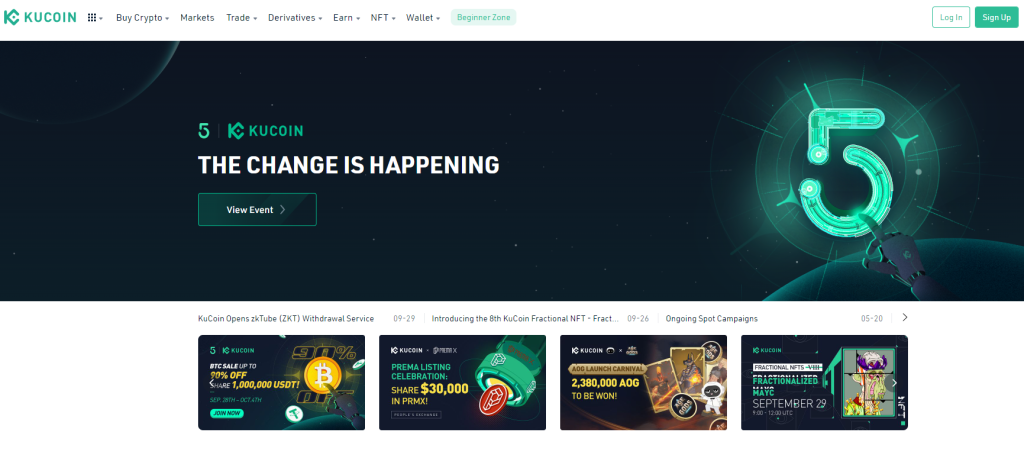
KuCoin supports more than 700 coins, and trading fees start at 0.1%. You will save 20% if you pay using KCS coin, and big-volume dealers will pay even less. The range of trading options available to KuCoin users, such as spot trading, margin trading, P2P trading, and futures trading, are the highlights of what the exchange has to offer. Users can also use the crypto borrowing, lending, and staking services.
As an illustration, KuCoin offers up to 0.6% APY on USDC staking. Not bad, but you can get more on some other places. Read on.
Binance
Binance is the most popular cryptocurrency exchange which is founded by Changpheng Zhao, a well-known blockchain industry expert, and expert in setting up trading systems.
The platform has been around for quite some time now, and it’s one of the most trusted exchanges out there. It offers a wide range of cryptocurrencies to trade on its platform and also allows users to buy crypto with fiat currency.
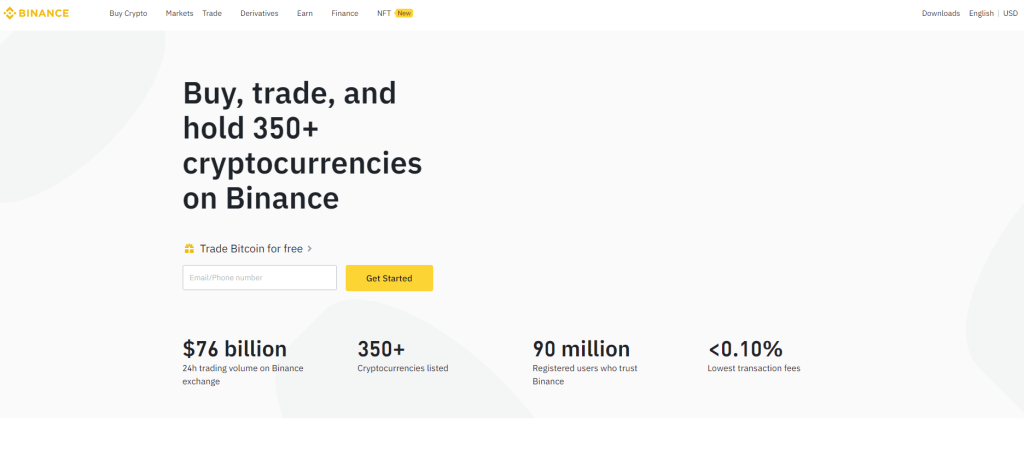
Besides being a leading exchange, Binance is also a very big market maker, which means that they are buying and selling cryptocurrencies in the markets.
On Binance, lending a stablecoin like USDT is quite flexible, and you have two choices. The first is called “Flexible Savings,” and it allows you to transfer USDT as well as redeem coins whenever you need them (at an interest rate of roughly 5.77%).
In addition, you can transfer stablecoins and lock them for 7, 14, 30, or 90 days using “Locked savings.” Additionally, depending on the time frame, you will receive rewards with interest that ranges from 6 to 7% on average.
Finally, trading on Binance may be done for nearly no cost (0.075%) if you sign up through this link. You will receive a further 10% lifelong discount as a result.
Crypto.com
A well-known cryptocurrency exchange that accepts a variety of crypto assets is called Crypto.com. The platform also gives you the chance to use your stablecoins to generate passive revenue. The stablecoin yield, however, depends on how much of CRO tokens you lock to stake on Crypto.com and the amount of stablecoins you deposit. Maximum APY you can get is 10%.
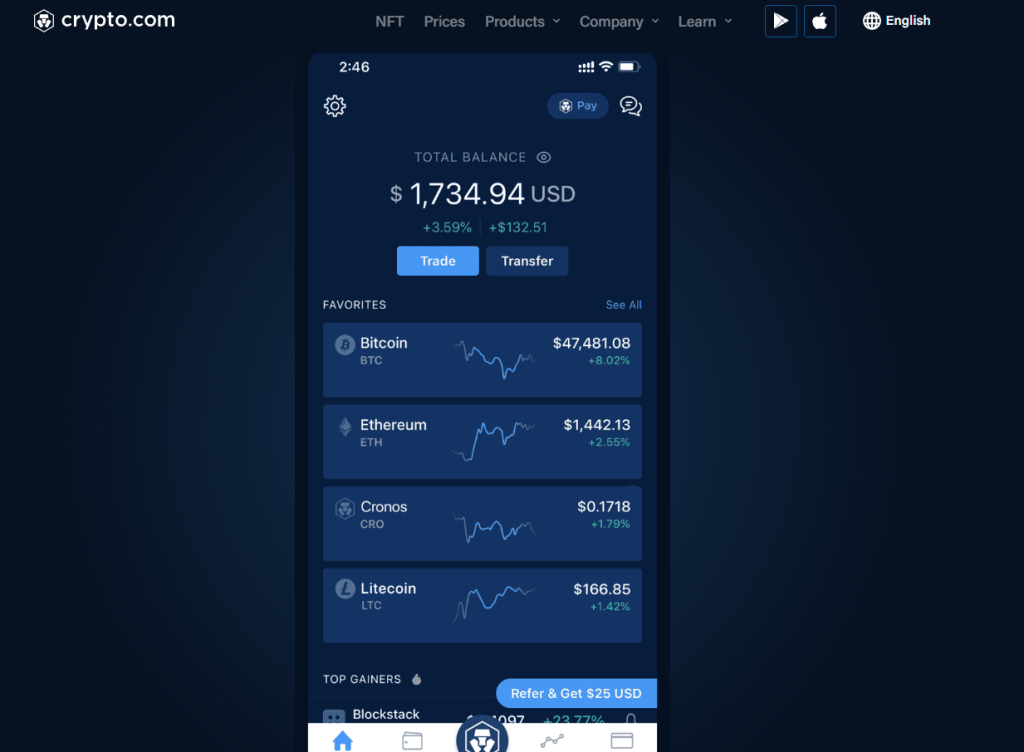
You must select the locked deposits and have as much as possible of CRO tokens staked on their platform in order to receive the best stablecoin interest rate. The highest APY for interest rates can reach 8.5%.
DeFi platforms offering higher APYs on USDC and USDT
If you want to earn passive income with your stablecoins and still keep full control of your funds, DeFi platforms are a great place to start. These platforms let you connect your Web3 wallet, like MetaMask, and interact directly with smart contracts; no sign-ups or middlemen needed.
Curve Finance
Curve Finance remains one of the most capital-efficient venues for stablecoin yield in DeFi. The protocol is purpose-built for stablecoin liquidity, which helps reduce impermanent loss compared to volatile asset pools.
Yields on Curve stablecoin pools usually fall between 1% and 10% APY, depending on the pool, trading volume, and incentive structure. Pools involving USDC, USDT, and DAI are among the most liquid, making Curve a go-to option for users seeking steady, DeFi-native stablecoin returns.
Pendle Finance
Pendle Finance takes a different approach to stablecoin yield by separating principal from future yield. This allows users to either lock in fixed returns or speculate on future APY movements, depending on market conditions.
Stablecoin strategies on Pendle have recently offered yields in the 7% to 15% APY range, with some opportunities pushing higher during periods of strong demand. These returns come with added complexity, but Pendle has become a popular choice for users looking to actively manage stablecoin yield rather than passively lend.
Aave
Aave is one of the most trusted options out there. You can deposit USDC or USDT into a pool, and people who borrow those coins pay you interest. The amount you earn depends on how much demand there is. In 2026, typical returns on USDC are around 3% to 4.5%, and USDT pays a bit less. Aave is easy to use and works on networks like Ethereum and Polygon, where you’ll need a little ETH or MATIC to cover gas fees.
Learn more about Aave
Compound
Compound is another well-known DeFi platform. It works in a similar way: you lend your stablecoins, and borrowers pay you interest. The design is a little more basic and geared toward developers, but it’s a safe and popular choice.
Visit Compound
Ethena
If you’re looking for higher returns and don’t mind a bit more complexity, Ethena is worth checking out. It offers its own synthetic stablecoin called USDe; it’s not backed by dollars like USDC or USDT. Instead, it stays stable using a method called a delta-neutral strategy, where it stakes Ethereum and then short-sells it at the same time. This creates a balance that keeps the price steady while earning yield.
How to stake on Ethena?
Ethena calls this system the “Internet Bond.” In 2026, USDe holders have been earning between 8% and 20% APY, depending on market conditions. These returns are much higher than on Aave or Compound, but they also come with more risk. Since the strategy uses derivatives and synthetic assets, it’s more complex and can be affected by things like funding rate swings.
Risk disclaimer: Ethena’s yield is not risk-free. Unlike USDC or USDT, USDe is not backed by cash or cash equivalents. Its stability depends on the effectiveness of its hedging strategy and the health of derivatives markets. Extreme volatility, exchange disruptions, or sustained negative funding rates could impact returns or peg stability.
For those who want to stake safely while keeping their crypto offline, CoolWallet Pro is a good choice. It’s a hardware wallet that connects to an app where you can stake stablecoins like USDC, USDT, or DAI. You do it through the wallet’s “Earn” feature, which connects to DeFi platforms in a secure way.
CoolWallet staking guide
Yields with cold wallet staking usually fall between 4% and 10% APR, depending on the platform and market conditions. It’s a solid option for people who want both steady returns and high security.
Is Stablecoin Staking Safe in 2026?
Stablecoin staking is generally considered lower risk than staking or lending volatile cryptocurrencies, but it is not risk-free. The level of safety depends heavily on where and how stablecoins are deployed, as well as the underlying mechanisms generating yield.
On centralized platforms, the main risks are custodial and counterparty risk. Users rely on the platform to manage funds responsibly, meaning insolvency, mismanagement, or regulatory intervention could impact withdrawals. While yields are usually more predictable, users give up direct control of their assets.
DeFi platforms introduce a different risk profile. Funds remain non-custodial, but smart contract risk becomes the primary concern. Bugs, exploits, or oracle failures can lead to losses, even on well-established protocols. In addition, some yield strategies depend on incentives or market demand, which can cause returns to fluctuate.
Finally, there is stablecoin-specific risk. Not all stablecoins are backed the same way, and depegging events, while rare, can happen during periods of extreme stress. Understanding whether a stablecoin is fiat-backed, overcollateralized, or synthetic is essential before committing capital.
In practice, stablecoin staking safety improves when risk is diversified across platforms, yields are treated as variable rather than guaranteed, and capital is allocated with an understanding of how returns are generated.
Read also:
- Sui Staking – Here’s How and Where to Stake SUI
- How and Where to Stake Solana (Full Guide)
- Best Crypto On-Chain Analysis Tools