For years, critics have dismissed Cardano as a “ghost chain,” a network heavy on promises but light on delivery. That framing made sense in previous cycles when the roadmap outpaced the reality. But in 2026, the narrative no longer holds.
Cardano has shipped. The question now isn’t whether the network will deliver on its promises but whether the market will finally recognize what’s already live.
What you'll learn 👉
What’s Actually Live: Leios, Van Rossem, and the Other Upgrades
Cardano enters this cycle with a set of working catalysts that critics don’t expect. In a recent X article, global non-custodial staking infrastructure provider Everstake stated that the Van Rossem hard fork (Protocol Version 11) is waiting for ratification in July 2026.
This upgrade is important because it was the first hard fork started entirely through Cardano’s on-chain governance rather than a unilateral decision by the founding team. It received 83.62% DRep support backed by 4.44 billion ADA.
— Everstake (@everstake_pool) July 10, 2026
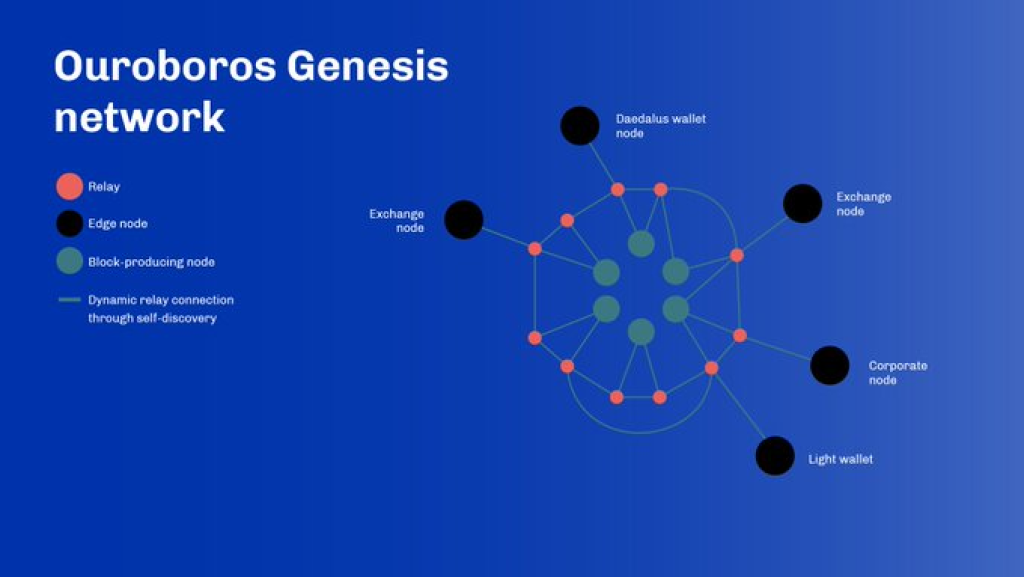
Ouroboros Leios went live on testnet June 23, 2026. Early simulations point to 200 to 1,000+ transactions per second depending on transaction size and targets up to 60x base-layer throughput. The testnet carries over 705,000 lines of consensus code.
Hydra continues active development for statace-channel scaling and at the same time interoperability through LayerZero and IBC expands connectivity across 800+ tokens and Cosmos ecosystems.
Institutions Can Now Touch ADA
Cardano crossed a structural threshold on February 9, 2026, when CME Group launched regulated ADA futures. The contracts come in standard (100,000 ADA) and micro (10,000 ADA) sizes, placing Cardano beside BTC, ETH, XRP, and SOL in CME’s product suite.
Regulated futures give institutions a compliant way to gain exposure or hedge without holding spot ADA directly. The key date to watch is August 9, 2026, when ADA becomes eligible for the streamlined ETF approval process after completing six months of CME futures trading.
Grayscale filed for a dedicated Cardano ETF under the ticker GADA on NYSE Arca. Bitwise, Canary Capital, 21Shares, VanEck, and Hashdex have also filed or signaled intent.
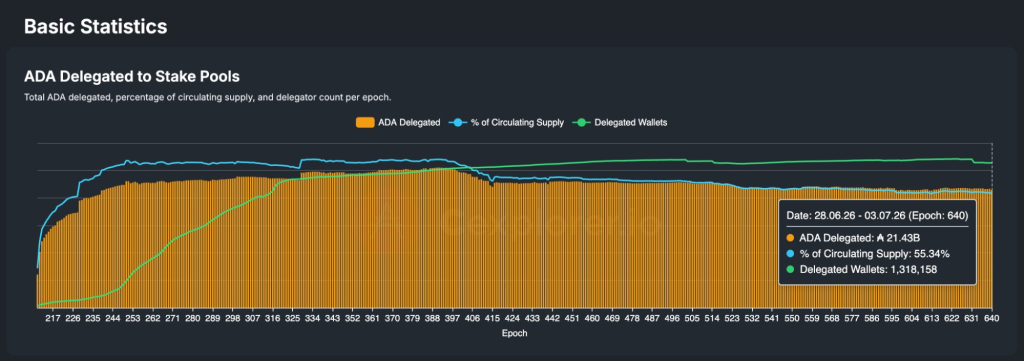
Under the CLARITY Act, Cardano is viewed as a strong candidate for commodity status thanks to its 3,000+ stake pools and no single entity holding more than 10% of ADA supply.
If the bill becomes law, the CFTC would gain spot-market jurisdiction over ADA. This will also remove the securities-law overhang that has kept many institutions on the sidelines.
Cardano’s Governance, AI, and Real Utility
What makes Cardano governance different is that its founding organization has handed control to token holders through a fully on-chain system.
Under CIP-1694 and the Voltaire era, governance actions are ordinary on-chain transactions. Any change requires three independent bodies to agree: DReps, the Constitutional Committee, and stake pool operators. Any ADA holder can register as a DRep, vote directly, or delegate to someone who votes on their behalf.
The most important institutional deployment is Midnight, Cardano’s privacy-focused partner chain. Monument Bank, a Bank of England-regulated lender, is tokenizing up to £250 million in retail deposits on Midnight. The deposits stay fully backed and redeemable in GBP, with privacy handled through zero-knowledge proofs.
Cardano has also moved into agent-based AI activity with native protocol support. The ecosystem integrated the x402 protocol, which allows AI agents to transact directly on-chain. Agents can pay for resources through API calls, settle transactions in ADA or USDM, and coordinate with other AI systems without a middleman.
RealFi, a stablecoin ecosystem built on Cardano, connects on-chain capital to real-world credit markets through a two-token model: USDr and sUSDr.
Read also: Why the SWIFT Blockchain News Is Bigger for XRP Than Most People Realize
Our Take: Will Cardano Price Finally Deliver Next Cycle?
Cardano still falls behind Solana and Ethereum in DeFi TVL and dApp activity. The whole case rests on execution. Can Leios move from testnet to stable mainnet on a reasonable timeline? Will the throughput gains change into real on-chain adoption?
Everstake operates as a trusted validator across Cardano and dozens of other networks. The network was built on peer-reviewed academic research using formal verification and high-assurance methods, the same techniques used in aviation and banking.
With Van Rossem moving through ratification, Leios scaling testnet running, regulated ADA futures on CME, institutional deployments like Monument Bank on Midnight, and native AI-agent capability through x402, Cardano has more live catalysts than any previous cycle.
Whether that translates into price performance depends on delivery over the coming months. The network is no longer a ghost chain. The question now is whether the market catches up to what’s already there.
Frequently Asked Questions
Subscribe to our YouTube channel for daily crypto updates, market insights, and expert analysis.