On-chain analysis has become one of the most important ways to understand what’s actually happening on crypto networks, from capital flows and exchange behavior to whale activity and user adoption.
We will explain the fundamental aspects of on-chain analysis and highlight some of the most effective tools to leverage for this purpose.
| Tool | Summary | ⭐ Best for |
|---|---|---|
| 🦙 DeFi Llama | Tracks TVL, liquidity, and ecosystem growth across 150+ chains and thousands of protocols. | Ecosystem trends, DeFi adoption, liquidity tracking |
| 🔍 Glassnode | Institutional-grade on-chain metrics covering supply dynamics, network activity, and market cycles. | Macro analysis, cycle timing, Bitcoin & Ethereum data |
| 🏜️ Dune Analytics | Custom dashboards and SQL-based queries for raw on-chain data across multiple chains. | Deep data analysis, custom metrics, developers |
| 🎯 Nansen | Wallet labeling and smart money tracking across major blockchains. | Tracking whales, funds, and smart money flows |
| 🧭 Arkham Intelligence | Visual fund-flow tracking with entity-labeled wallets and relationship mapping. | Wallet identification, whale tracking, forensic analysis |
| 📊 CryptoQuant | Exchange flows, reserves, and holder behavior presented in an accessible format. | Retail traders, exchange data, market signals |
| 📈 Santiment | Combines on-chain data with social and developer activity metrics. | Sentiment analysis, trend detection, dev activity |
| 🪙 Token Terminal | Financial metrics like revenue, fees, P/S ratios, and protocol fundamentals. | Fundamental analysis, valuation comparisons |
| 📚 Messari | Research-driven analytics with structured reports and protocol datasets. | In-depth research, institutional-grade reports |
| 🌐 Artemis | Weekly ecosystem dashboards covering users, dev activity, and DEX volumes. | L1/L2 ecosystem comparisons, usage trends |
| 🌙 LunarCrush | Tracks social engagement and sentiment across major platforms. | Social momentum, narrative tracking |
| 🧩 Footprint Analytics | Structured dashboards and cross-chain datasets bridging raw data and fundamentals. | User behavior analysis, DeFi & NFT research |
| 🔐 IntoTheBlock | AI-driven on-chain signals combining wallet data, price action, and sentiment. | Predictive signals, risk analysis, market direction |
What you'll learn 👉
DeFi Llama
As its name suggests, DeFi Llama acts as your guide through the winding trails of decentralized finance. The platform tracks key metrics on over 1,500 protocols to assess their growth and adoption.
DeFi Llama’s total value locked (TVL) data offers a clear snapshot of capital flowing into protocols. You can quickly compare market caps to TVL to gauge potential. The trading pair explorer helps uncover hidden gems with high liquidity and yield.
As of 2026, DeFi Llama now also supports Base, zkSync, Linea, Scroll, and Solana, along with 150+ other chains, making it one of the most extensive multi-chain analytics platforms.
DeFiLlama Chains
DeFiLlama Chains expands on DeFi Llama’s core offering by shifting the focus from individual protocols to entire blockchain ecosystems. Instead of tracking where liquidity sits within a single app, this view shows how capital, users, and activity are distributed across chains.
Chain-level analytics are increasingly used to compare adoption across ecosystems like Base, Solana, Ethereum L2s, and newer networks. Metrics such as total value locked by chain, dominant sectors, and protocol concentration help analysts identify where real usage is forming, not just where incentives are temporarily high.
Glassnode
Glassnode provides institutional-grade fundamental analytics on crypto networks. Its platform gives you the tools to conduct in-depth research on entities like exchanges, miners, custodians, and OTC desks.

Robust indicators in Glassnode’s metrics library contain insights like network activity, supply dynamics, and transaction volumes. Seamless integration with TradingView strengthens technical analysis.
Glassnode coverage now also includes Base, Solana, and zkSync in addition to Bitcoin and Ethereum, allowing for more abundant multi-chain network data for cross-market analysis.
Dune Analytics
Dune Analytics remains one of the most widely used platforms for on-chain data, now offering expanded Pro tiers alongside robust free features. The platform allows anyone to analyze crypto networks by creating human-readable SQL queries that output charts and dashboards.
Whether you’re a developer building DeFi apps or an investor researching protocol metrics, Dune empowers you to unlock insights. Prebuilt templates make it easy to track things like exchange flows, transaction fees, and other trends. Custom queries give you the flexibility to analyze anything.
Dune now allows data querying from Base, zkSync, Solana, and other new L2s, providing analysts with more flexibility to monitor activity across ecosystems in one dashboard.
Nansen
Nansen targets more advanced crypto investors with its robust on-chain analytics and wallet tracking tools that label and monitor millions of addresses across multiple blockchains. Features like wallet profiling, tracking of exchanges and funds, and discovery tools provide an information edge.

In 2026, Nansen added wallet tracking on Base, zkSync, Linea, Scroll and Solana, providing its labeled wallet database with a greater multi-chain view.
CryptoQuant
As a free middle ground between Dune and Nansen, CryptoQuant offers versatile on-chain insights. Its indicators analyze factors like exchange reserves, supply dynamics, and holder behavior. Best for exchange reserve monitoring and market cycle timing.
CryptoQuant makes on-chain analytics approachable for retail traders. With both summary dashboards and detailed indicators, it’s a well-rounded resource. Free access helps overcome the monetary barriers of paid platforms.
CryptoQuant’s analytics now cover Solana, Base, zkSync, and other L2 ecosystems, offering exchange and holder data across both EVM and non-EVM chains.
Read also:
- Best Layer 2 Chains: A Comprehensive Guide to Ethereum’s Top 11 Layer 2 Projects
- Best Decentralized Exchanges For Leveraged Trading
- Best Projects On LayerZero: Top DeFi Coins to Invest in On LayerZero
Santiment: Empowering Informed Investment Decisions
Best for: Strengthening your investment decisions by tracking ongoing and social trends.
Pricing: Starting from $49/month. You can pay using SAN tokens or opt for DAI/ETH payments.
Santiment stands as a powerful cryptocurrency analysis tool, offering a wide array of features for conducting crypto market research, exploring opportunities, and analyzing various metrics to make informed investing decisions.
Santiment’s on-chain data now spans major L1s and L2s, including Base, zkSync, Linea, and Solana, enabling broader coverage of network activity and sentiment.
Key Features:
- 20+ on-chain, social, and dev metrics
- Social media listening and analysis features, including top 10 trending words on social media about cryptocurrencies
- Identification of emerging social trends
- Customized alerts for major network anomalies
- Personalized watchlist for weekly coin updates
- Insights and behavioral reports from Santiment’s crypto analysts
Footprint Analytics
Footprint Analytics positions itself between raw data platforms like Dune and financial-focused tools like Token Terminal. It offers structured dashboards, cross-chain datasets, and visual analytics that make complex on-chain data easier to interpret without heavy SQL work.
The platform is particularly useful for analyzing user behavior, NFT activity, DeFi flows, and ecosystem growth across multiple chains. As demand grows for accessible but deep blockchain analytics, Footprint has been gaining traction among researchers who want more structure than Dune but more flexibility than fixed financial dashboards.
Token Terminal: In-Depth DeFi Analytics
Token Terminal emerges as another robust DeFi analytics tool with a range of metrics to explore:
- FDV figures, circulating supply, trading volumes, token holders, TVLs, fees, revenue, token incentives, P/S and P/F ratios, daily active users, and more.
- Data on exchanges, blockchains, and the DeFi sector.
- Financial statements and fundamental analysis of projects.
- Real-time revenue feeds
As volatility remains an inherent part of crypto markets, Token Terminal serves as a valuable tool to stay informed and make well-calibrated decisions, even during turbulent times.
Messari: Abundant Data and Research
Messari offers a suite of products including Messari Research and Messari Data, providing a wealth of information:
- Loads of data with a chart explorer, fundraising metrics, and protocol data.
- Daily research reports covering a vast range of crypto topics, including DAOs, L1 and L2s, Web3, NFTs, Macro, and more.
- Quarterly and year-end reports offering deeper insights.
One point to consider is that much of Messari’s research is not available for free. Accessing the most in-depth analysis requires signing up for a Pro or Enterprise account.
Artemis: Web3 Analytics and Ecosystem Reports
Artemis serves as a web3 analytics platform, offering weekly ecosystem reports with a comprehensive dashboard encompassing:
- Developer activity and protocol usage.
- Data on DEX trading volumes and users.
- Analytics for different L1 and L2 chains.
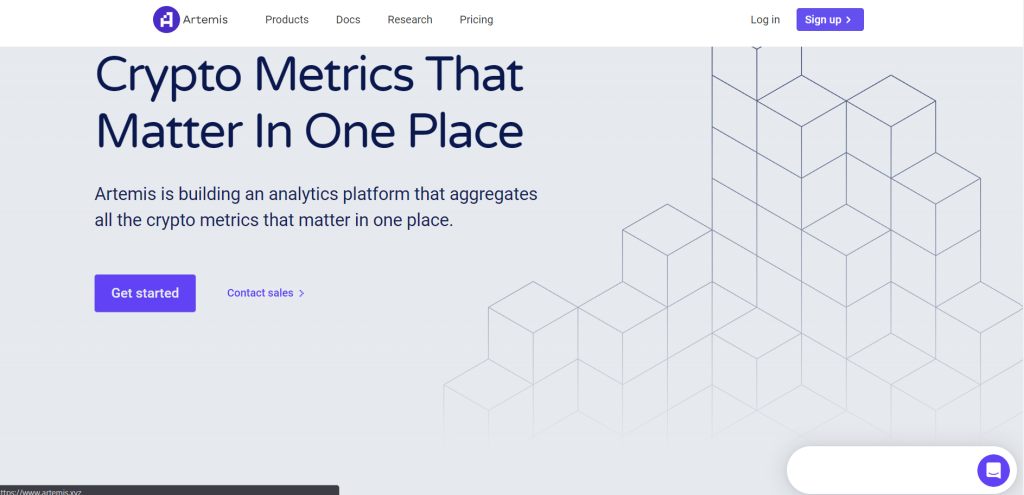
Artemis also provides valuable free research reports covering activity in various ecosystems, further enriching the analytical toolkit.
LunarCrush
LunarCrush offers comprehensive overviews of crypto social trends. Its feed and tools allow you to track which coins are gaining the most online momentum and attention.
The platform analyzes social metrics across platforms like Reddit, Twitter, Tiktok, Lens and Telegram. You can see which projects have rising or falling sentiment and activity. LunarCrush also enables social listening for alpha on emerging trends and opportunities.
For traders, digesting social movement is just as crucial as on-chain analysis. LunarCrush makes this process seamless and insightful. Its array of free features makes it accessible for all users too.
IntoTheBlock
IntoTheBlock focuses more on blockchain data and analytics surrounding crypto assets. It captures on-chain signals that can predict price movements and identify opportunities.
Some key metrics provided include exchange flow, concentration by large holders, developer activity, and correlation with other assets. IntoTheBlock offers a well-rounded fundamental perspective on blockchain networks.
The platform also utilizes AI and machine learning for directional signals. This adds a predictive edge to complement its robust data feeds.
AI-Assisted On-Chain Analysis in 2026
AI isn’t just a buzzword in crypto anymore, it’s now a core part of how traders and analysts work with on-chain data.
In 2026, the top analytics platforms are using artificial intelligence to comb through billions of blockchain transactions in real time, catching patterns and red flags long before most people would notice.
Take Glassnode, for example. It now has AI-powered alerts that instantly flag unusual activity, like a sudden surge in exchange deposits or a whale wallet that’s been asleep for years suddenly moving coins.
Nansen has rolled out GPT-style search, so you can literally type something like, “Which wallets have been buying SOL this week?” and get a full, detailed answer without touching any code.
IntoTheBlock has gone a step further, blending price action, trading volume, and wallet movements into AI-driven sentiment models that predict whether the market might turn bullish or bearish. It’s not a magic crystal ball, but it’s a huge time-saver, giving you actionable insights so you can spend less time digging through raw data and more time making smart moves.
Key On-Chain Analysis Use Cases in 2026
On-chain analysis has come a long way, it’s no longer just about tracking whale wallets. In 2026, traders, institutions, and analysts are putting these tools to work in some pretty smart ways.
ETF Flow Tracking: Want to know if the big money is buying? You can now monitor wallets and exchanges tied to Bitcoin and Ethereum ETFs to see how much institutional demand is actually coming in.
Restaking Liquidity Monitoring: With restaking booming through protocols like EigenLayer, analysts are tracking exactly where liquidity providers are parking their assets to earn those extra rewards.
Cross-Chain Arbitrage Detection: Jumping between chains to find the best deal is faster than ever. Today’s tools can scan multiple networks in seconds to spot profitable trade routes.
On-Chain Sentiment Indexing: By combining transaction data with social chatter, these platforms can give you a live read on market mood, letting you see if the crowd is feeling bullish, bearish, or somewhere in between.
New Tools & Integrations
Arkham Intelligence
Arkham has become one of the most widely used wallet tracking tools, mapping relationships between entities, exchanges, and on-chain activity with visual fund-flow tracking.
It maps out relationships between wallets, exchanges, and other entities and allows analysts and traders to follow the flow of money through networks. It is therefore a useful tool in tracking whales, uncovering hidden associations, and validating on-chain activity with greater accuracy.
Flipside Crypto
Flipside is unique in blockchain analysis in that it compensates its users for producing dashboards, reports, and visualizations.
With the help of its bounty program, anybody can earn tokens through the uncovering of useful information, thereby making crypto on-chain data analysis competitive and collaborative. It’s especially favored among analysts who’d prefer to earn money out of their research.
EigenPhi
EigenPhi focuses on MEV (Maximal Extractable Value) and sandwich attack analytics. It helps traders and protocols detect harmful on-chain strategies that can lead to slippage or unexpected losses. By revealing these hidden costs, EigenPhi gives DeFi users the tools to better protect their trades and optimize execution.
Chainalysis Public Tools
Chainalysis now offers a range of free public dashboards for compliance, illicit flow tracking, and high-level network activity. They are relied upon heavily by regulators, institutions, and analysts to measure ecosystem health, track suspicious activity, and offer assurance around compliance with evolving regulation.
Is On-Chain Analysis Reliable?
On-chain analysis is a powerful way to understand what is happening on a blockchain, but it should be viewed as a decision-support tool rather than a guaranteed signal. It provides transparent, verifiable data pulled directly from public ledgers, which makes it far more reliable than sentiment alone or unverified market rumors.
That said, on-chain data is context-dependent. Large wallet movements do not always signal buying or selling pressure, as transfers can involve internal exchange operations, custody reshuffles, or protocol migrations. This is why labeled wallet data and entity attribution play a crucial role in interpretation.
Another limitation is timing. Many on-chain indicators are lagging by nature, meaning they confirm trends after price action has already started. While some metrics can offer early signals, on-chain analysis works best when combined with market structure, liquidity conditions, and broader macro factors.
In practice, on-chain analysis is most reliable when used as part of a broader framework. Combining wallet tracking tools, exchange flow data, and behavioral metrics with technical and fundamental analysis leads to more balanced and informed conclusions.