
Bitcoin, Ethereum, and many major cryptocurrencies are trading lower today as several pressures hit risk assets at once. The weakness reaches beyond crypto, with stocks also declining as oil prices climb and US bond yields move closer to 5%.
Fresh inflation data has made the situation more difficult. Renewed conflict between the US and Iran has also pushed energy prices higher. Bitcoin and Ethereum now face pressure from macroeconomic concerns, ETF outflows, liquidations, and a large options expiry.
What you'll learn 👉
Higher US Inflation Has Weakened Hopes for Interest Rate Cuts
The latest US Producer Price Index showed wholesale prices rising 5.4% from the previous year. That figure exceeded expectations and increased from the annual rate recorded during the previous month.
Energy costs played a major role in the report. Higher fuel prices can eventually affect transportation, production, and consumer costs across the economy. Monthly wholesale prices also increased by 0.4%.
This inflation reading matters for crypto because it reduces the chance of lower interest rates. The Federal Reserve could keep rates elevated or consider another increase if price pressures remain strong.
Investors can earn better returns from government bonds when interest rates remain high. Crypto becomes less appealing under those conditions because Bitcoin, Ethereum, and other digital assets do not provide guaranteed returns.
Oil Prices And Bond Yields Are Pressuring Bitcoin And Ethereum
Escalating tension involving the US and Iran has pushed oil beyond $100 per barrel. Concerns around energy supplies and the Strait of Hormuz have kept oil prices elevated.
Higher oil prices can keep inflation elevated for longer. That possibility has pushed US Treasury yields higher, with the 10 year yield moving close to 5%. The stronger returns available from government bonds can pull capital away from riskier markets.
A stronger dollar creates another obstacle for crypto prices. Bitcoin and other assets priced in dollars often struggle when the US currency becomes stronger and safer investments provide competitive returns.
Several pressures are affecting the crypto market today:
- US wholesale inflation reached 5.4% during August.
- Oil prices climbed above $100 amid renewed conflict.
- The 10 year Treasury yield moved close to 5%.
- Bitcoin ETF outflows showed weaker institutional demand.
- Leveraged liquidations increased the immediate selling pressure.
Bitcoin Price Leads the Wider Crypto Market Decline
CoinMarketCap reported that Bitcoin price dropped 4.36%, making BTC the main driver behind today’s crypto market decline. Ethereum price fell 1.58%, and the total cryptocurrency market capitalization declined 2.95% to $2.63 trillion.
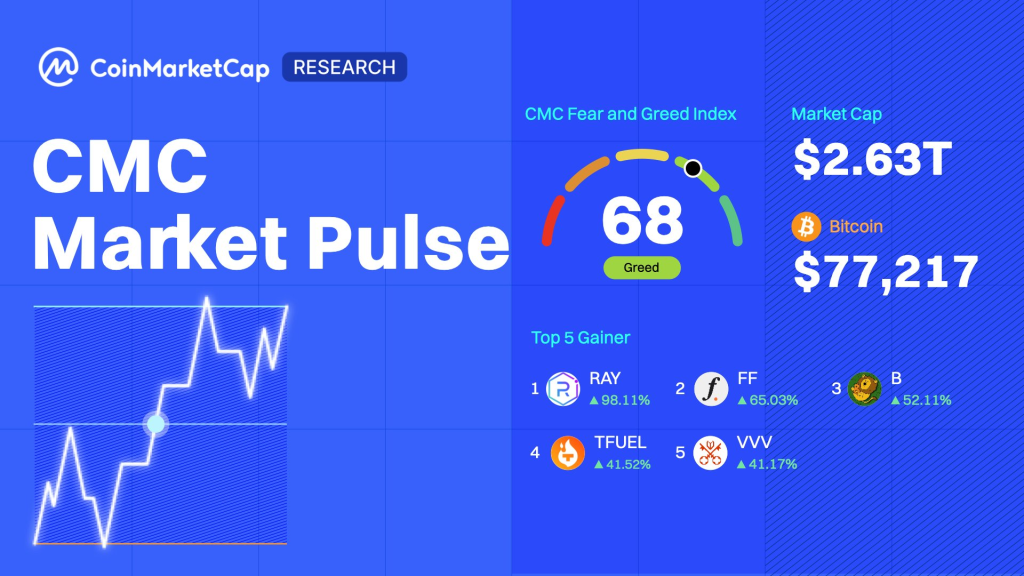
Almost $600 million in leveraged long positions were liquidated across Wednesday and Thursday. These liquidations occur when exchanges automatically close leveraged trades because the positions no longer have enough collateral.
Forced sales can accelerate a decline even when the original cause comes from outside the crypto market. Bitcoin price weakness then spreads across altcoins because BTC remains the market’s largest source of liquidity and direction.
Traditional markets faced similar pressure during the same period. The S&P 500 declined 1.24%, and the Nasdaq lost 0.45%. Those numbers show that the crypto market decline forms part of a broader retreat from risk assets.
Ethereum Traders Take A More Defensive Position
Ethereum has held up better than Bitcoin based on the reported percentage changes. Its derivatives market still shows greater caution among options traders.
Around $3 Billion in Bitcoin and Ethereum Options Expire on Deribit as ETH Traders Turn More Defensive
— Wu Blockchain (@WuBlockchain) September 11, 2026
Approximately $2.9 billion to $3 billion in Bitcoin and Ethereum options expired on Deribit, including about $2.53 billion in BTC options and $406 million to $425 million in… pic.twitter.com/XLD8bGXhUk
Wu Blockchain reported that about $2.9 billion to $3 billion in Bitcoin and Ethereum options expired on Deribit. The total included roughly $2.53 billion in BTC options and between $406 million and $425 million in ETH options.
Bitcoin’s put to call ratio stood at 0.76, which indicated more call exposure than put exposure. Ethereum’s ratio reached 0.89, showing a more defensive position among ETH options traders.
The maximum pain levels were close to $75,000 for Bitcoin and $2,150 for Ethereum. Settlement produced limited volatility, which means the options expiry was probably not the main cause behind the wider decline. Macro pressure and leveraged liquidations appear more important.
Read Also: Kaspa Price Prediction: Can BlockDAG Technology Carry KAS Into the Crypto Top 10?
CLARITY Act Uncertainty Creates Another Concern for Bitcoin
Crypto analyst Bee connected part of the Bitcoin decline to falling expectations around the CLARITY Act. Bee claimed that the probability of passage had fallen to 10% and argued that previous delays had come before large BTC declines.
THE CLARITY ACT TRAP IS PLAYING OUT AGAIN
— bee🐝 (@0xbeehive) September 11, 2026
The odds of the CLARITY Act passing just collapsed to 10%!
Retail sees a dead bill and starts panicking
Smart money sees a textbook engineered liquidity sweep
I see Phase 3 of the exact roadmap I warned you about:
– Trigger bad… https://t.co/jZpqwvnmrf pic.twitter.com/x2Y4v34eoP
Bee also described the latest move as part of a liquidity sweep designed to force weaker holders out of the market. That view remains the analyst’s interpretation and does not provide confirmed evidence of deliberate manipulation.
Regulatory uncertainty can still affect Bitcoin price because the CLARITY Act could define how US authorities oversee digital assets. Lower expectations for its passage may reduce confidence among investors seeking clearer rules.
Today’s crypto market decline comes from several connected problems. Higher inflation weakened hopes for lower rates, oil above $100 increased economic concerns, and higher bond yields pulled capital toward safer assets. ETF outflows and liquidations then placed more pressure on Bitcoin price and Ethereum price.
FAQs
Subscribe to our YouTube channel for daily crypto updates, market insights, and expert analysis.