Trading platforms used to compete on a narrow set of functions: order routing, price charts, and access to listed markets. That model is losing ground. Retail users now expect the speed, continuity, and interface quality they already get from other digital services. At the same time, product lines are widening, market hours are stretching, and risk has to be assessed in real time instead of at set intervals. The result is a clear shift in platform design.
Exchange access still matters, but it no longer defines the whole product. Platforms are being shaped by broader digital habits, stronger infrastructure, and a market that values convenience, visibility, and flexibility as much as basic execution.
What you'll learn 👉
24/7 Access Is Redefining Platform Expectations
Round-the-clock access is changing what users expect from trading platforms. Services such as Robinhood and the London Stock Exchange Group have helped normalize longer availability, faster updates, and systems that stay responsive outside standard market windows. That puts pressure on older operating models built around end-of-day processing, overnight reconciliation, and delayed risk checks.
A platform that still works in batches can feel out of step when users expect balances, exposure, and available actions to update continuously. This shift did not come from finance alone. A lot of digital products had to move from place-based access to always-available online delivery, and that change trained users to expect constant continuity. Gambling services were part of that broader move as they shifted from land-based venues to online and then to mobile, where speed and uninterrupted access became standard.
Providers such as 32Red online casino reflect that mobile-first pattern, with services designed to remain available whenever users open the app or site. That wider market influence matters because it changed the baseline for digital service design. Users now compare trading products with the smoothness of other always-on systems, even when the underlying mechanics are more complex.
Infrastructure Is Moving From Periodic Reporting to Continuous Oversight
Under the surface, the biggest change is architectural. Older financial systems were often built to collect trades, process them in stages, and report outcomes after the fact. That structure made sense when usage was narrower, and markets were less connected. It is harder to defend now. Users want live portfolio values, immediate margin visibility, and alerts that reflect current exposure, not a delayed snapshot from earlier in the session.
Cloud-native architecture supports that shift by replacing periodic reporting with continuous real-time risk evaluation. Instead of waiting for a batch cycle to finish, platforms can assess positions as prices move, user behavior changes, and market volatility increases.
This reduces blind spots and helps firms react faster when activity spikes. It also improves the customer-facing side of the product, because users can see a more accurate picture of what they hold and what they can do next.
Cross-Asset Access Is Becoming a Standard Expectation
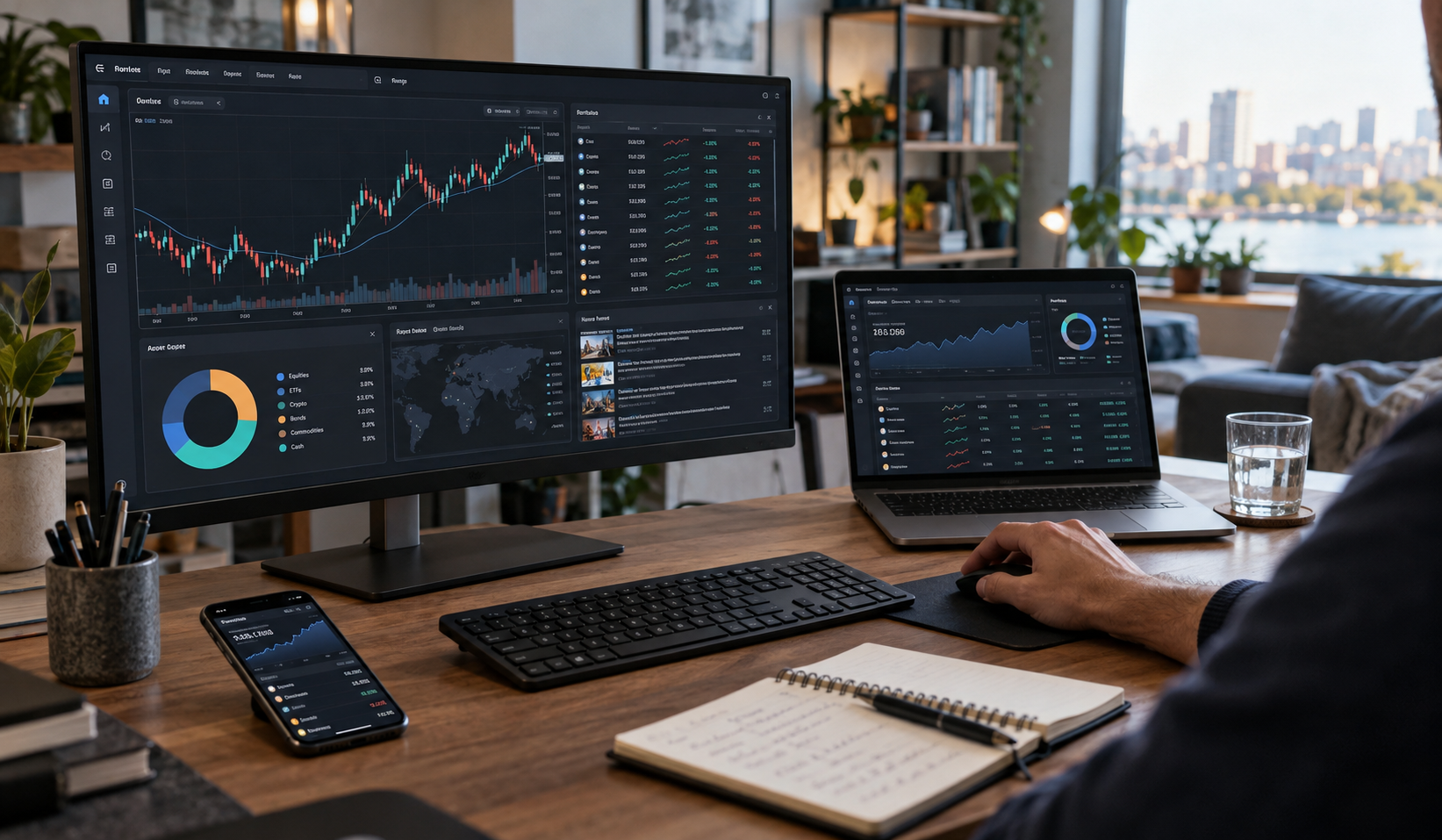
The line between traditional finance and digital assets is getting thinner. Many users no longer see a strong reason to keep equities, forex, and crypto in separate environments if one platform can present them through a unified account view. That is pushing providers to build universal portfolios that show multiple asset classes side by side, with shared funding tools, common reporting, and simpler position tracking.
This broadening of scope also changes the role of the platform. Instead of acting as a gateway to one exchange or one product type, it becomes a place where users compare opportunities across markets. Alternative products add to that shift. Event-driven and prediction-style markets extend speculation beyond standard asset pricing, giving platforms more ways to retain attention and support different strategies within one interface.
Lower fees and fractional shares have also widened access. Products once geared toward larger accounts or specialist desks can now be offered to a far broader user base. As barriers fall, feature depth matters more. People want tools that help them move between asset classes without friction, understand how positions interact, and manage exposure in one place.
Platforms Are Turning Into Embedded Workspaces
Many trading products are expanding beyond execution because users now expect the surrounding workflow to be built in. Analytics, account monitoring, and risk tools are moving directly into the main interface instead of sitting in separate systems. This makes the platform more useful during live decision-making, especially for retail users who do not want to jump between multiple dashboards to understand one position.
Embedded ecosystems also support better operational control. Compliance checks, account warnings, and risk prompts can appear at the point of action, reducing delays and helping users make decisions with clearer context. That approach serves the platform as much as the customer. If more of the process happens inside one coordinated environment, service quality improves and friction drops across onboarding, trading, and account management.
What matters here is convenience with substance. A polished interface on its own has limited value if the data is thin or the tools are detached from real activity. The stronger platforms are using embedded features to make the product more coherent. Users can track performance, review exposure, and act on new information in one place, which gives the platform a broader role than a standard crypto exchange connection ever could.
Social Signals and Transparency Now Shape Platform Value
Retail trading has become more social, more narrative-led, and more immediate. For many users, market decisions are no longer based only on isolated chart reading or private research. They are influenced by live communities, shared sentiment, and fast-moving discussion around themes, sectors, and events. Platforms have had to respond by making information easier to follow and more visible in real time.
That does not mean copying social media. It means recognizing that users value context as much as raw data. Watchlists, trending instruments, shared commentary, and clear market summaries all help people understand where attention is moving. When these features are well integrated, they keep the platform relevant during quieter periods and more informative during volatile ones.
Trading platforms are moving beyond traditional exchange features because user expectations, product scope, and technical demands have all changed at once. Access alone no longer defines value. The stronger model is broader: always on, cross-asset, data-rich, and built around continuous oversight. Platforms that understand that shift are building products suited to how people actually use digital services now, not how financial systems worked years ago.