NEAR Protocol and Bittensor entered 2026 with different links to artificial intelligence, although their price charts now look surprisingly similar. Both tokens recovered from February lows before losing about 45% from their yearly peaks. That leaves one important question for 2027: will concentrated AI exposure beat wider blockchain utility?
The answer depends on supply, demand, and the AI projects the market rewards next. One token holds a narrow advantage.
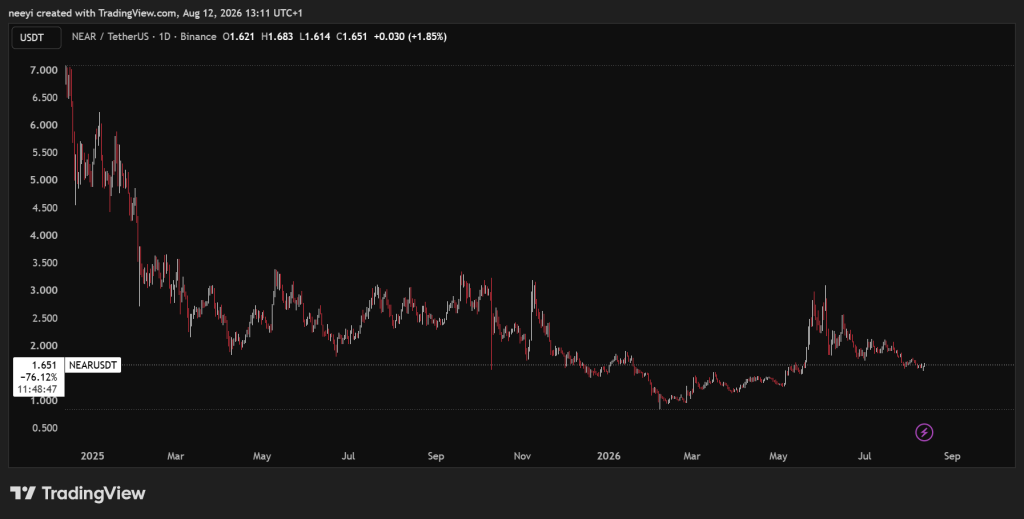
NEAR price opened 2026 near $1.50 before reaching about $1.89. February brought a decline toward $0.80, followed by a recovery to roughly $3 during June. NEAR now trades near $1.60, more than 45% below that peak.
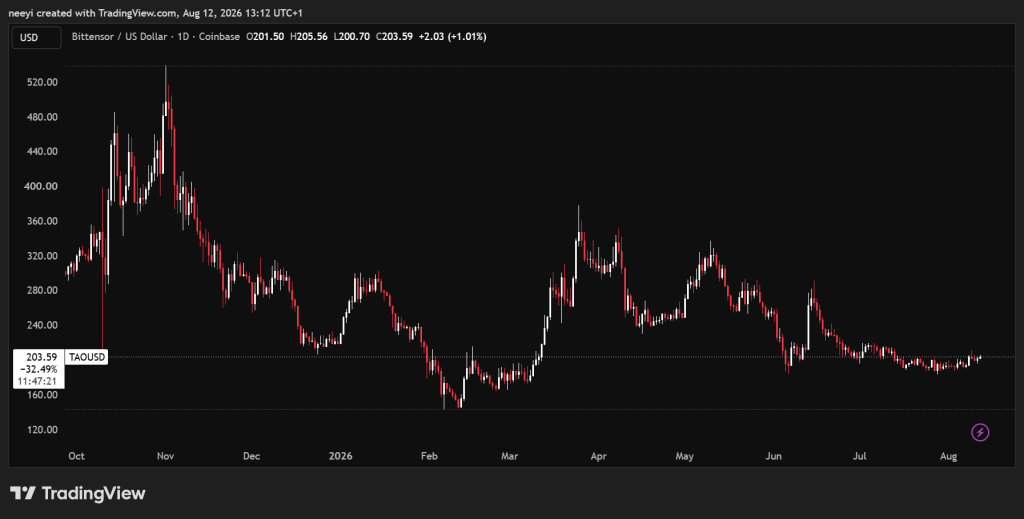
Bittensor followed a comparable route at higher price levels. TAO price began near $220 and dropped to $144 during February. A rebound carried the token to about $379 during March. TAO now trades close to $203, also about 45% below its 2026 high.
Autonomous agents can manage wallets, complete DeFi transactions, and make machine to machine payments. Those uses favor networks that support frequent automated activity.
Limited GPU access has strengthened decentralized computing. NVIDIA events can also direct capital toward tokens connected to artificial intelligence.
AI alliances, zero knowledge machine learning, and useful products offered support. Macroeconomic weakness still prevented strong rallies from holding.
What you'll learn 👉
Bittensor and NEAR Protocol Serve Different Parts of the AI Economy
Bittensor Offers Concentrated Exposure to Decentralized Intelligence
Bittensor is a decentralized network for machine intelligence and specialized AI services. Subnets cover data collection, robotics, and computer vision. Validators require TAO, which connects activity to token demand.
TAO also carries Bitcoin style scarcity. Its maximum supply is 21 million tokens, and the December 2025 halving reduced block rewards to 0.5 TAO.
That concentration works both ways. Subnet teams may sell TAO to cover computing costs. Governance disputes and weaker AI enthusiasm can also produce deep declines.
NEAR Protocol Combines AI Agents With Wider Blockchain Utility
NEAR Protocol is a sharded Layer 1 network for apps, crosschain services, and autonomous agents. Chain abstraction simplifies activity, and NEAR Intents lets agents request crosschain transactions.
Dynamic resharding expands capacity as demand grows. Low costs suit agents that make frequent payments. NEAR price can benefit from apps and crosschain volume when pure AI tokens weaken.
NEAR faces intense Layer 1 competition. Strong technology cannot support NEAR price unless applications deliver transactions, fees, and recurring users.
Token Supply Could Decide Which AI Token Performs Better
NEAR has about 1.30 billion tokens circulating, and its supply is fully unlocked. A 2025 upgrade cut maximum annual inflation from about 5% to 2.5%, although fee burns can lower net issuance.
TAO has about 11.22 million tokens issued from its 21 million maximum. New supply enters through network rewards, not conventional investor unlocks. The next projected halving arrives during December 2029.
| Factor | NEAR Protocol | Bittensor |
|---|---|---|
| Token | NEAR | TAO |
| Circulating or issued supply | About 1.30 billion | About 11.22 million |
| Maximum supply | No fixed maximum | 21 million |
| Current issuance | Up to about 2.5% yearly before burns | 0.5 TAO per block |
| Major unlock risk | Supply fully unlocked | No standard investor cliff |
| Main demand source | Apps, Intents, fees, and AI agents | Subnets, validators, and AI services |
| Likely volatility | Moderate to high | High |
ChatGPT Price Scenarios Give TAO the Stronger 2027 Upside
We asked ChatGPT to develop 3 possible 2027 price scenarios for NEAR Protocol and Bittensor. The estimates use current prices, supply mechanics, prior peaks, and plausible market capitalizations.
ChatGPT Gives NEAR Price 3 Possible Routes Through 2027
The bear case places NEAR price between $0.70 and $1.30. Continued crypto weakness and disappointing network activity would make this range possible.
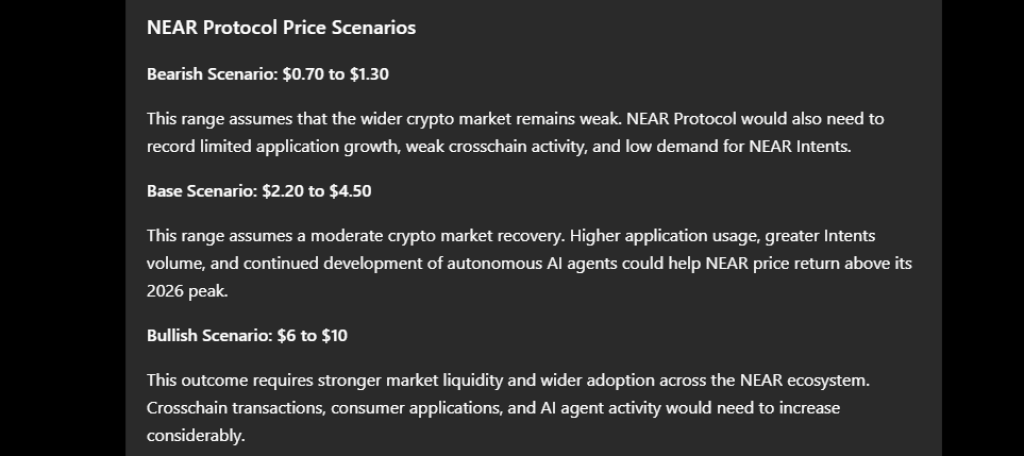
The base case gives NEAR a range between $2.20 and $4.50. Moderate market recovery, higher Intents volume, and greater application usage would support that outcome.
The bull case places NEAR between $6 and $10. Reaching this range would require strong crypto liquidity and wider adoption of crosschain applications and AI agents.
ChatGPT Gives TAO Price Greater Upside and Greater Risk
The bear case places TAO price between $90 and $160. Weak subnet demand, operational token sales, or falling interest in AI crypto could drive that outcome.
The base case gives TAO a range between $280 and $520. Expanding subnet activity and a moderate crypto recovery would support this middle path.
The bull case places TAO between $650 and $1,000. Strong AI demand, limited liquid supply, and rising subnet participation would be necessary.
| Scenario | NEAR Price Range | TAO Price Range | Main Condition |
| Bear Case | $0.70 to $1.30 | $90 to $160 | Crypto weakness continues and network demand disappoints |
| Base Case | $2.20 to $4.50 | $280 to $520 | AI usage grows and the broader market recovers moderately |
| Bull Case | $6 to $10 | $650 to $1,000 | Strong liquidity returns and adoption expands across leading AI networks |
Bittensor wins the stronger 2027 price outlook under the base and bull cases. TAO has a hard supply cap, lower issuance, and direct exposure to decentralized AI demand. Those strengths could produce larger percentage moves if AI regains market leadership.
NEAR remains the steadier choice because demand can come from areas beyond artificial intelligence. TAO offers greater upside, but it carries deeper downside if subnet economics disappoint.
FAQs
Subscribe to our YouTube channel for daily crypto updates, market insights, and expert analysis.