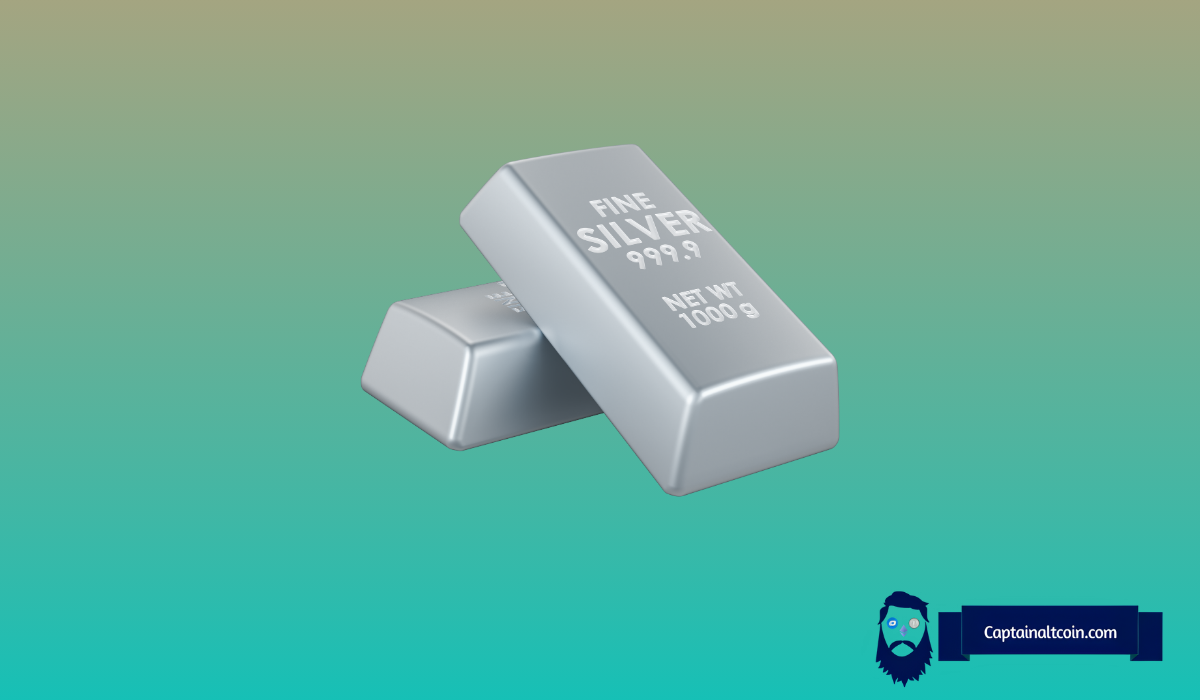
Silver has just crossed another uncomfortable line.
XAG/USD briefly fell below $50 per ounce on October 30 for the first time since November 2025, extending one of the most brutal precious-metals corrections of the year.
Silver was down roughly 4.5% during the session before recovering slightly, with Kitco showing spot silver around $50.50 in early New York trading. The metal had traded above $53 only a day earlier.
The bigger picture is even more dramatic.
Silver reached an all-time high above $121 in January. At today’s prices, more than half of that value has disappeared in nine months.
So why is silver getting wrecked right now?
What you'll learn 👉
The Fed Pause Did Not Give Silver What Bulls Wanted
The first problem is interest rates.
The Federal Reserve held rates steady this week, which might normally have helped precious metals.
Instead, the data that followed made another rate increase look more plausible.
Stronger-than-expected U.S. economic growth and accelerating inflation have reinforced expectations that the Fed could hike again in December. Reuters reports that the combination of resilient growth, inflation pressure and expensive oil has pushed markets toward a more hawkish view of the next meeting.
That is bad news for silver.
Silver pays no yield. When Treasury yields remain elevated, investors have a stronger alternative available in interest-bearing assets.
This is one reason the Fed’s decision to pause has not translated into the relief rally silver bulls were hoping for.
Oil Is Making the Inflation Problem Worse
The second problem is energy.
Oil prices have remained elevated amid supply concerns connected to the conflict involving Iran and disruptions around the Strait of Hormuz.
Reuters reports that crude is heading toward a fourth consecutive monthly gain.
BREAKING: Silver has crashed below $50 for the first time in 11 months. Almost $4 TRILLION has now been wiped out from silver’s market cap since its January record high. https://t.co/dMYPHP2hWB
— Bull Theory (@BullTheoryio) October 30, 2026
Higher oil feeds directly into inflation expectations.
That creates an awkward environment for silver.
Inflation itself can support precious metals over longer periods, but if that inflation forces the Fed to keep rates high or hike further, real yields can remain elevated.
Right now, the rate effect is winning.
Silver Has Another Problem Gold Doesn’t
Silver is not simply a cheaper version of gold.
It is also an industrial metal.
That makes its price much more sensitive to expectations for manufacturing, solar demand, electronics and broader economic activity.
This dual identity can become painful during uncertain periods.
Gold can still attract defensive central-bank and safe-haven demand.
Silver needs both investment demand and industrial demand to remain strong.
Recent analysis has pointed to concerns around softer solar demand, substitution in manufacturing and weaker investor positioning, even though longer-term demand from electrification, data centers and grid infrastructure remains substantial.
That helps explain why silver has been falling faster than gold during this correction.
The January Rally Left Silver Extremely Vulnerable
There is also a simpler explanation.
Silver went too far, too fast.
The metal reached approximately $121.62-$121.79 in January after an extraordinary rally. It had gained around 70% in January alone before the reversal began.
When a market becomes that extended, positioning becomes crowded.
Once momentum turns, the traders who bought late begin exiting. Leveraged positions are reduced. Trend-following funds can move from buyers to sellers.
That process has now taken silver from above $120 to around $50.
It is a decline of roughly 59%.
The frequently repeated claim that almost $4 trillion has been erased from silver’s “market cap” should be treated cautiously. Unlike a public company or cryptocurrency, silver does not have one universally accepted circulating-supply figure from which a standard market capitalization can be calculated.
The price destruction itself, however, is very real.
Why Silver Is Getting Wrecked Right Now
There is no single catalyst behind this collapse.
Several forces have aligned:
- the Fed has not pivoted toward easier policy;
- U.S. inflation remains elevated;
- resilient economic growth leaves room for another rate hike;
- expensive oil is adding another inflation risk;
- high yields are competing with non-yielding precious metals;
- industrial-demand concerns hurt silver more than gold;
- and the huge January rally left the market vulnerable to a severe positioning reset.
Silver can still have a compelling longer-term supply-and-demand story.
But that story is not controlling price today.
The short-term market is focused on rates, yields, positioning and the failure of buyers to defend successive support levels.
Silver briefly losing $50 makes the next few sessions especially important.
If bulls quickly reclaim the level, today’s break could turn into another failed breakdown.
For more financial news and price predictions, click here.
Subscribe to our YouTube channel for daily crypto updates, market insights, and expert analysis.