
Gold had a rough week after a strong rally earlier in the year. The metal is currently trading around $5,173 per ounce, down roughly 4% over the past week as selling pressure picked up across the precious metals market.
The pullback comes at the same time as a surprising development in the ETF market. A chart shared by Katusa Research shows that the SPDR Gold Shares ETF (GLD) just recorded the largest weekly outflow in its entire history.
Based on the data, more than $4.2 billion left the fund in a single week, marking the biggest weekly withdrawal since the ETF launched nearly two decades ago.
GLD Sees Largest Outflow in Its History
The chart published by Katusa Research tracks weekly fund flows in the GLD ETF going back to 2004. Most of the time, the inflows and outflows remain relatively modest, with green bars showing weeks when money entered the fund and red bars showing weeks when capital left.
Occasionally there are larger spikes during periods of market stress or strong rallies. But the most recent move stands out clearly.
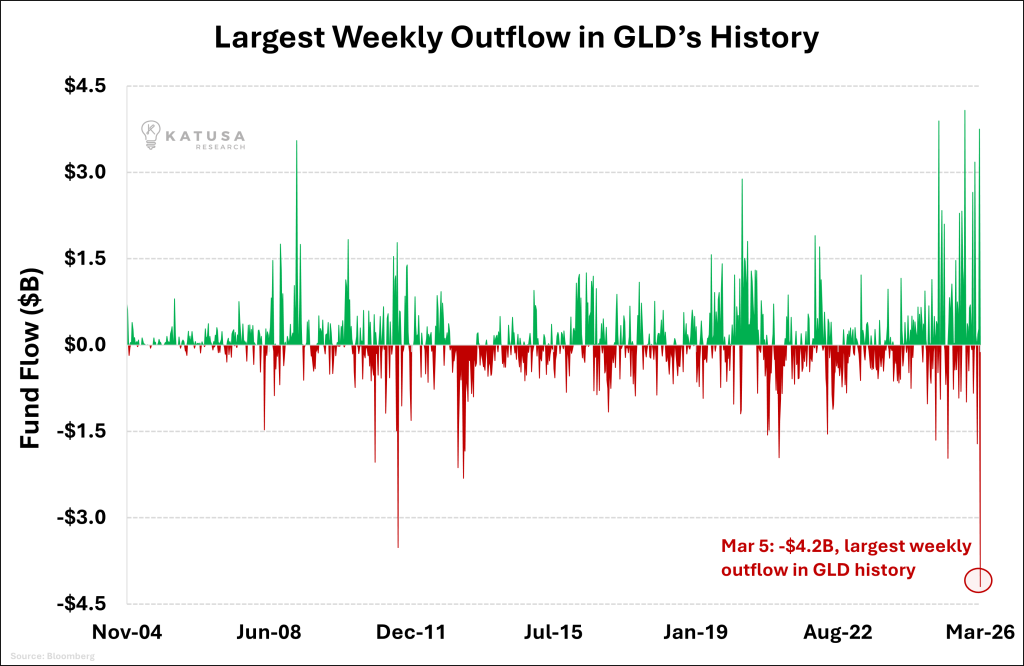
The chart shows March 5, 2026, when GLD saw $4.2 billion leave the fund in a single week. That drop is a lot larger than any previous red bar on the chart, which makes it the biggest weekly outflow in the ETF’s history.
What makes the move even more interesting is the timing. The outflow happened while gold was trading near record highs, which indicates that some investors may be taking profits after the massive run-up in prices.
Read also: Oil Is Exploding Higher During the War, So Why Is Gold Barely Moving?
Physical Gold Demand May Be Increasing
Another interpretation of the data is that some investors may be converting their ETF exposure into physical gold.
When investors sell shares of GLD, the ETF may need to adjust its underlying gold holdings. In some cases, large outflows can reflect institutional investors redeeming shares and taking delivery of physical metal rather than holding the ETF.
That dynamic could explain why the outflow is happening at a time when global interest in the gold price remains strong.
Over the past few years, central banks have been among the biggest buyers of gold, adding large amounts of the metal to their reserves. At the same time, geopolitical tensions and inflation concerns have continued to push investors toward hard assets.
The result is a market where gold prices remain historically elevated, even as ETF flows show unusual volatility.
Subscribe to our YouTube channel for daily crypto updates, market insights, and expert analysis.