
Popular crypto analyst MarryParty highlighted one of the most overlooked forces suppressing Solana’s price for nearly two years: the ongoing liquidation of FTX’s massive SOL holdings. His update explains why the relentless sell pressure has persisted since early 2024, and more importantly, why it’s finally close to ending.
At the core of his argument is a simple but powerful idea: Solana’s price since 2024 hasn’t reflected fundamentals, adoption, or network strength. Instead, it’s reflected forced seller dynamics created by the FTX bankruptcy. The estate originally held around 55 million SOL, most of it locked, and the court ruled that these tokens must be used to repay creditors. That meant a multi-year stream of scheduled unlocks and controlled selling, no rally could fully escape it.
MarryParty points to the 2024 auctions as the turning point. Galaxy Digital, Pantera Capital, and Figure Technologies bought out the bulk of the locked supply, paying between $64 and $102 per SOL, far below market prices at the time. These buyers didn’t receive their tokens instantly; they inherited the vesting schedule through 2029, meaning the market has been absorbing roughly 930,000 SOL per month since the big unlock in March 2025. That month alone, 3.03 million SOL hit exchanges, which led to a sharp 17% drop, which MarryParty notes was not a natural correction; it was pure supply pressure.
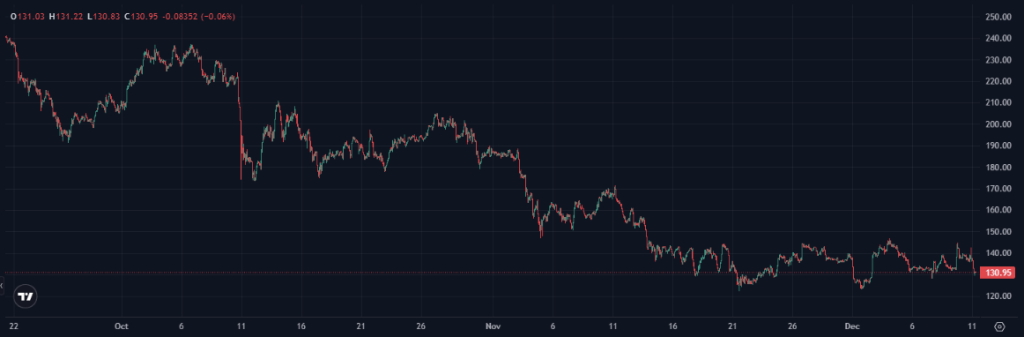
As of December 2025, roughly 38 million SOL from the original FTX stash remains locked, but the important nuance is this:
the majority of the aggressive selling has already happened.
The March unlock was the largest cliff, and the subsequent monthly vesting releases shrink proportionally each cycle.
MarryParty showed another key point: the FTX estate is now running a $16.3 billion surplus, with more than enough cash and assets to repay creditors in full with interest. That means the estate is no longer under pressure to rapidly liquidate tokens. The remaining SOL is being offloaded gradually and strategically by institutional buyers who purchased the vesting contracts, not by Kroll directly. These firms are financially incentivized to avoid crashing the market.
This is why the analyst argues the suppression phase is approaching its final stretch. Once the bulk of the vesting supply is absorbed, Solana will finally trade on fundamentals (ecosystem growth, developer activity, user metrics, fee revenue) not bankruptcy overhead. In MarryParty’s view, that could open the door to what he calls Solana’s “true fair-value phase,” a valuation he estimates could eventually gravitate toward the $1,000 region once structural sell pressure disappears.
For now, the last vesting cycles are still unfolding, but the worst of the forced selling is behind the market. And as MarryParty notes, “when this is over, SOL finally gets to breathe on its own.”
Subscribe to our YouTube channel for daily crypto updates, market insights, and expert analysis.