New U.K. crypto tax rules are raising privacy concerns after requiring cryptoasset service providers to collect more detailed information about their customers, including physical addresses.
The rules form part of the U.K.’s implementation of the Cryptoasset Reporting Framework, which took effect in January 2026. Under the framework, exchanges and other crypto service providers must gather identifying information so transactions can be reported to HM Revenue and Customs.
That includes determining where customers are located for tax purposes.
The privacy concern comes from how this information could interact with public blockchain data.
Bitcoin transactions are recorded permanently on a public ledger. Crypto wallet addresses themselves do not automatically reveal a person’s name or home address, but once an exchange connects a verified customer identity to specific transactions, authorities and service providers can potentially build a much clearer picture of that user’s activity.
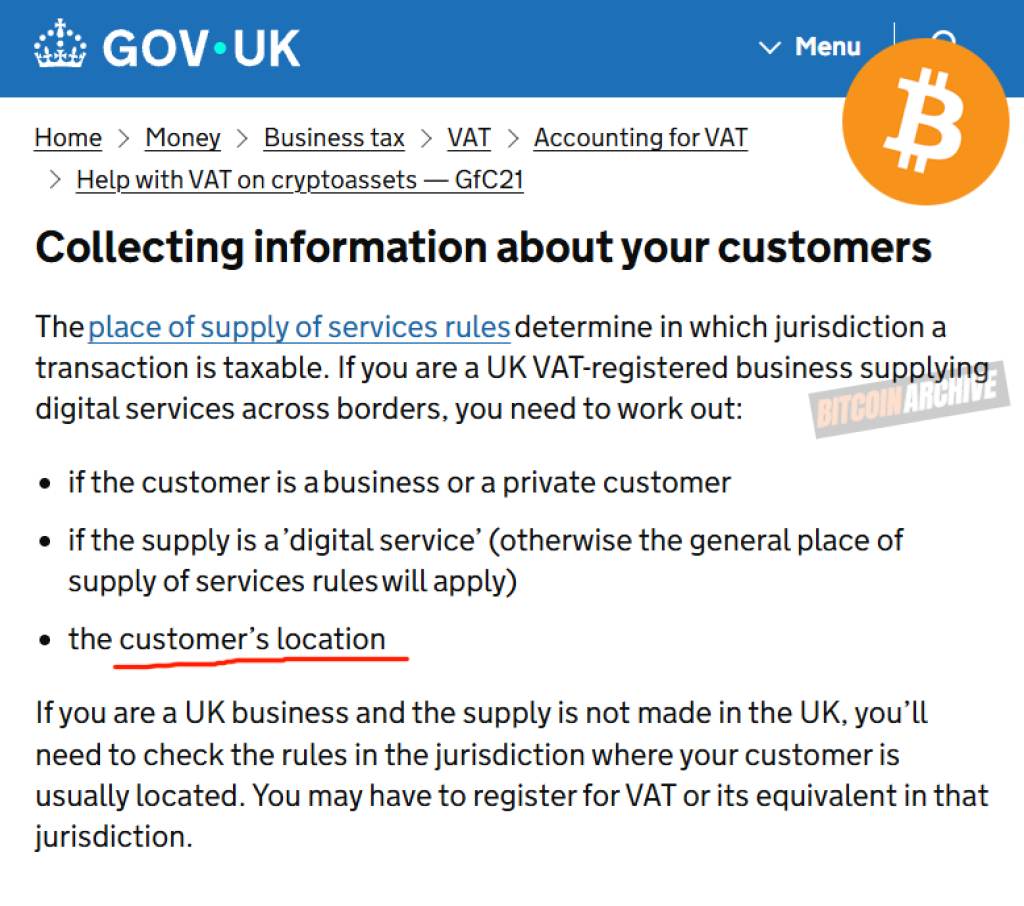
Bitcoin Archive described the rules as potentially exposing crypto users’ physical locations, pointing to U.K. guidance requiring businesses to establish a customer’s location.
Why the Privacy Concern Goes Beyond Tax Reporting
The main concern is not simply that exchanges will know where customers live. It is that personal identity data, physical addresses and transaction histories can potentially be tied together over time.
Because Bitcoin transactions remain visible on a public blockchain, once an address is linked to a verified user, that connection can make past and future activity easier to trace. That creates a much stronger privacy link than users may expect when they think of Bitcoin as pseudonymous.
The important point is that the blockchain itself is not publishing users’ home addresses. The risk comes from centralized platforms collecting identity and location data alongside transaction records.
The U.K. government’s goal is tax compliance and improved reporting, particularly for cross-border crypto activity. Similar reporting frameworks are also being adopted internationally.
Still, the rules add another layer to the long-running privacy debate around cryptocurrency.
Bitcoin was designed around pseudonymous addresses, but the more personal information exchanges are required to collect, the easier it becomes to connect those addresses with real-world identities.
For users, that means the privacy implications of using regulated crypto platforms are becoming different from simply holding Bitcoin in a self-custody wallet.
For more financial news and price predictions, click here.
Subscribe to our YouTube channel for daily crypto updates, market insights, and expert analysis.