Most crypto projects are easy to summarize. They are a blockchain, an exchange, a mining application, or a payment product. BlockDAG is harder to place in one category because it is attempting to build all four at once.
The project now reports more than 374,000 holders across 130 countries, over 4 million X1 mobile miners, 22,800 physical mining rigs shipping worldwide, and nearly 10 billion BDAG locked through live staking. Those figures suggest that the BlockDAG ecosystem is already substantial in terms of reach. The more important question is whether that audience is translating into real activity.
Three products offer the clearest way to answer it: the live BlockDAG Casino, the upcoming Super App, and the dedicated BlockDAG Exchange. Together, they reveal a strategy based on moving users from mining and holding into gaming, trading, payments, and everyday crypto management.
What you'll learn 👉
The Casino Is BlockDAG’s First Major Activity Test
The BlockDAG Casino and Sportsbook is the most developed consumer product in the network today. It offers more than 100 games and has reportedly crossed $200 million in total wagering volume. During a recent 30-day period alone, the platform added 13,000 registered players, processed 23,000 deposits, handled more than $150 million in wagers, and generated $4.7 million in gross gaming revenue.
These numbers are useful because they show more than account creation. Deposits, wagering volume, and gaming revenue indicate repeat actions occurring inside a live application. In a market where many networks speak about future utility, BlockDAG can point to a product already producing measurable user behaviour.
The Casino also serves as an early stress test for the underlying network. Gaming platforms require rapid transaction handling, stable wallet connections, dependable deposits, and a smooth user interface. BlockDAG says its upgraded AWS-based RPC architecture and optimized mempool system now support more than 7,000 transactions per second with two-second consensus. The network has also processed over 100,000 transactions in a single 24-hour period.

That performance matters because the Casino is only one part of the plan. If BlockDAG intends to support gaming, mining, staking, transfers, cards, and exchange trading simultaneously, transaction capacity cannot remain a theoretical specification. It must work under active consumer demand.
The Casino therefore plays two roles. It is a revenue-generating product, but it is also a preview of how the wider BlockDAG ecosystem may function when more services become available.
The Super App and Exchange Could Connect the Missing Pieces
BlockDAG’s next phase is centred on consolidation. At present, users may encounter the project through the X1 mining app, physical mining rigs, staking, claiming, or the Casino. The Super App is intended to bring those separate entry points into one interface.
Developed through a partnership with RedotPay, the Super App is expected to allow users to mine BDAG, claim and stake coins, hold cryptocurrencies and stablecoins, access the Casino, trade through the BlockDAG Exchange, send funds internationally, and spend through virtual or physical cards.
That is a wide product range, but the logic behind it is straightforward. BlockDAG already has millions of people interacting with mining. The Super App could give those users somewhere to go next. Instead of mining BDAG and leaving it idle, a user may be able to stake it, trade it, transfer value, access gaming products, or use connected payment services from the same application.
This is where the RedotPay relationship becomes important. Mining and staking can attract crypto-native users, but payment cards and international transfers can give the product wider relevance. The Super App’s success will depend on how easily these services work together. A long feature list is less valuable if users still face complicated transfers, high fees, restricted card access, or fragmented accounts.
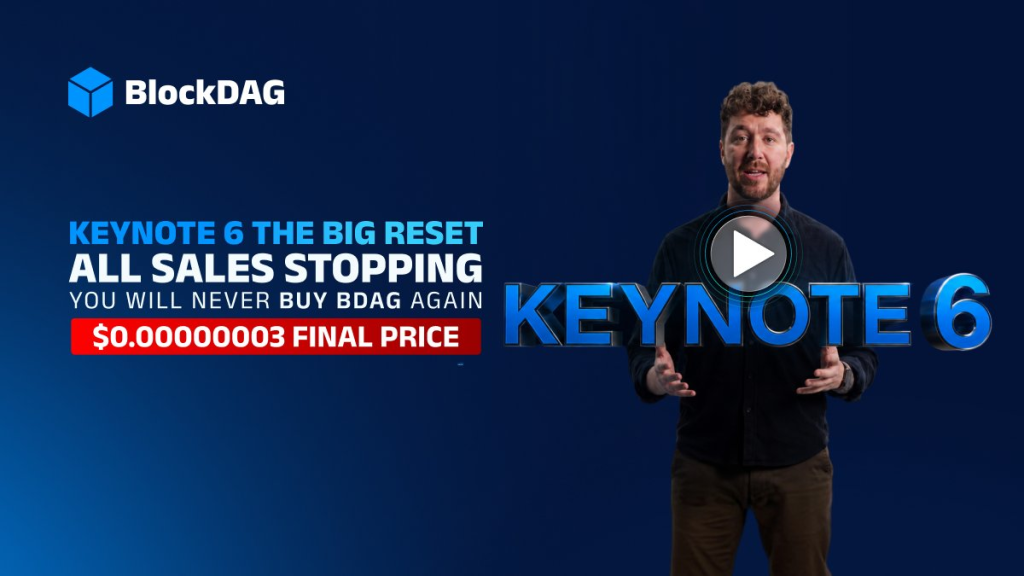
The dedicated BlockDAG Exchange is another major piece. It is expected to provide spot and futures trading, giving users direct market access without relying entirely on third-party venues. BlockDAG is currently offering buyers $1,000 in Exchange Credit ahead of its launch, alongside a limited BDAG entry of $0.00000003, a stated $0.025 buyback price, and a projected 132x return scenario.
An owned exchange could create a continuous loop inside the BlockDAG ecosystem. Mobile miners bring in new participants. Staking encourages longer engagement. The Casino creates transaction activity. The Exchange adds trading, and the Super App connects these products with wallets, transfers, stablecoins, and payment cards.
The scale is already visible at the community level. More than 4 million X1 miners represent a large potential audience, while 374,000-plus holders and nearly 10 billion staked BDAG suggest deeper participation from a smaller core. The 22,800 physical miners shipping worldwide add a hardware layer that most consumer crypto applications do not have.
The real size of BlockDAG, therefore, should not be measured only by holders or miners. It should be measured by how many of those people move between products. A miner who later stakes, trades, uses a payment card, or visits the Casino becomes more valuable to the network than a user who opens the X1 app once and disappears.
Conclusion
The BlockDAG ecosystem is already larger than a single token launch, with mining, staking, gaming, trading, and payments being assembled around one network. Its clearest proof of activity comes from the Casino, where reported wagering, deposits, and revenue show people using a live product.
The Super App and Exchange could widen that activity by giving millions of miners and holders direct access to storage, transfers, cards, spot markets, and futures. Scale, however, will be determined by repeat usage rather than feature count. If these products connect smoothly, BlockDAG will have built a broad consumer platform. August therefore marks less of a finish line and more of a test of whether its large community can become lasting economic activity on-chain.

Presale | Website | Telegram | Discord
DISCLAIMER: CAPTAINALTCOIN DOES NOT ENDORSE INVESTING IN ANY PROJECT (CRYPTO OR CASINO) MENTIONED IN SPONSORED ARTICLES. EXERCISE CAUTION AND DO THOROUGH RESEARCH BEFORE INVESTING YOUR MONEY. CaptainAltcoin takes no responsibility for its accuracy or quality. This content was not written by CaptainAltcoin’s team. We strongly advise readers to do their own thorough research before interacting with any featured companies. The information provided is not financial or legal advice. Neither CaptainAltcoin nor any third party recommends buying or selling any financial products. Investing in crypto assets is high-risk; consider the potential for loss. Any investment decisions made based on this content are at the sole risk of the readCaptainAltcoin is not liable for any damages or losses from using or relying on this content.