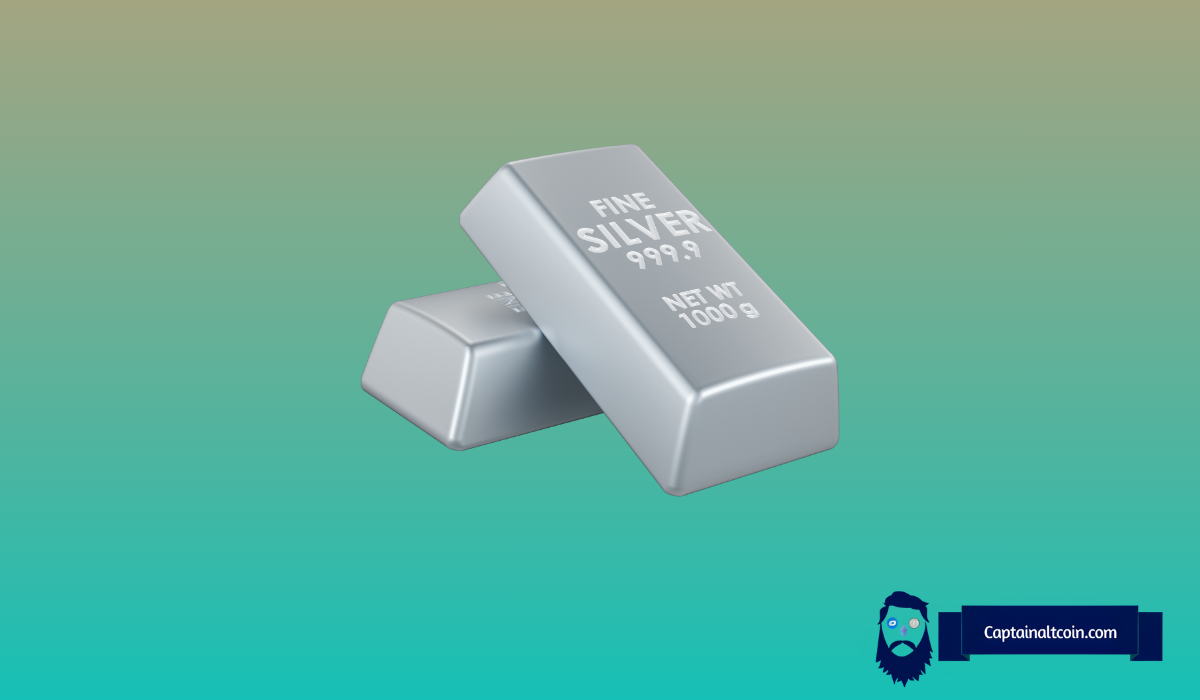
The Silver price pulled back today, dipping from around $91 to roughly $88 per ounce. After a powerful multi-week rally, some cooling was expected. But one analyst argues that this move is just noise within something much bigger.
JoeLange posted a detailed thread outlining what he sees as the early phase of a structural repricing in silver. His message is: this is not a short-term pump. In his words, “The silver bull market is not heating up. It has barely begun.”
His argument mixes industrial demand, monetary dynamics, and the long-standing gold-to-silver ratio imbalance into one larger thesis.
Shanghai Premium and the Physical Squeeze Narrative
JoeLange pointed to a growing divergence between Shanghai silver prices and COMEX futures. With Shanghai trading above $99 and COMEX sitting near $90, the premium has hovered close to $9. He sees that gap as a sign of persistent physical tightness rather than a temporary arbitrage anomaly.
That premium has become almost routine in recent weeks. For Lange, that consistency matters. It signals strong regional demand that paper markets may not fully reflect.
He also highlights the industrial backbone of silver demand. Roughly 70% of annual silver consumption now comes from industry. Solar panels, AI data centers, EVs, aerospace systems, electronics, and military technologies all require silver. Once embedded into products, much of that metal is not economically recoverable.
SILVER update:
— JoeLange (@JoeLang51440671) February 26, 2026
Shanghai SILVER price is sitting over $99 an ounce and the COMEX futures are sitting just under $90.
That’s still a $9 premium, but that seems to be the norm lately.
The SILVER rally is just in the beginning stages and it looks like the pullback is over.
I have…
Lange framed it bluntly: “This is no longer primarily a monetary trinket.” In his view, silver has become an essential industrial input in a digitized and electrified global economy.
That structural demand tightens the supply base, especially as mine production ratios remain far below historical monetary ratios.
The Gold–Silver Ratio and the $500 Thesis
A major pillar of his outlook centers on the gold-to-silver ratio.
For years, that ratio has floated between 60:1 and 80:1, even exceeding 100:1 at times. Yet actual mine production runs closer to 9 ounces of silver for every ounce of gold. Under historical metallic standards, the traded ratio often ranged between 10:1 and 17:1.
If gold were to climb toward $5,000 in a world defined by debt expansion, currency pressure, and central bank accumulation, and if the ratio merely compressed to 10:1, the math points toward $500 silver.
Lange acknowledges that such numbers sound extreme. But his core argument is about backdrop. Moving from $20 to $100 silver happened in an environment with different structural conditions. A move from $100 to $500, he argues, would unfold under tighter physical supply, stronger industrial competition, and a more fragile monetary system.
He believes silver is no longer capped by the same suppression forces that dominated prior decades. Whether one agrees with the manipulation narrative or not, the technical breakout above long-term resistance has changed market psychology.
The pullback from $91 to $88 does not invalidate that thesis. In fact, after steep rallies, retracements often serve to reset positioning.
If JoeLange is correct, the current move is not the end of a spike. It is the beginning of a repricing phase that could unfold in stages.
Silver has already re-entered mainstream conversation. The question now is whether this pullback is just a pause, or the calm before the next acceleration.
Read also: $5,000 in XRP or Silver Today? ChatGPT’s Winner Might Surprise You
Subscribe to our YouTube channel for daily crypto updates, market insights, and expert analysis.