Silver price action has become one of the strangest stories in global markets right now.
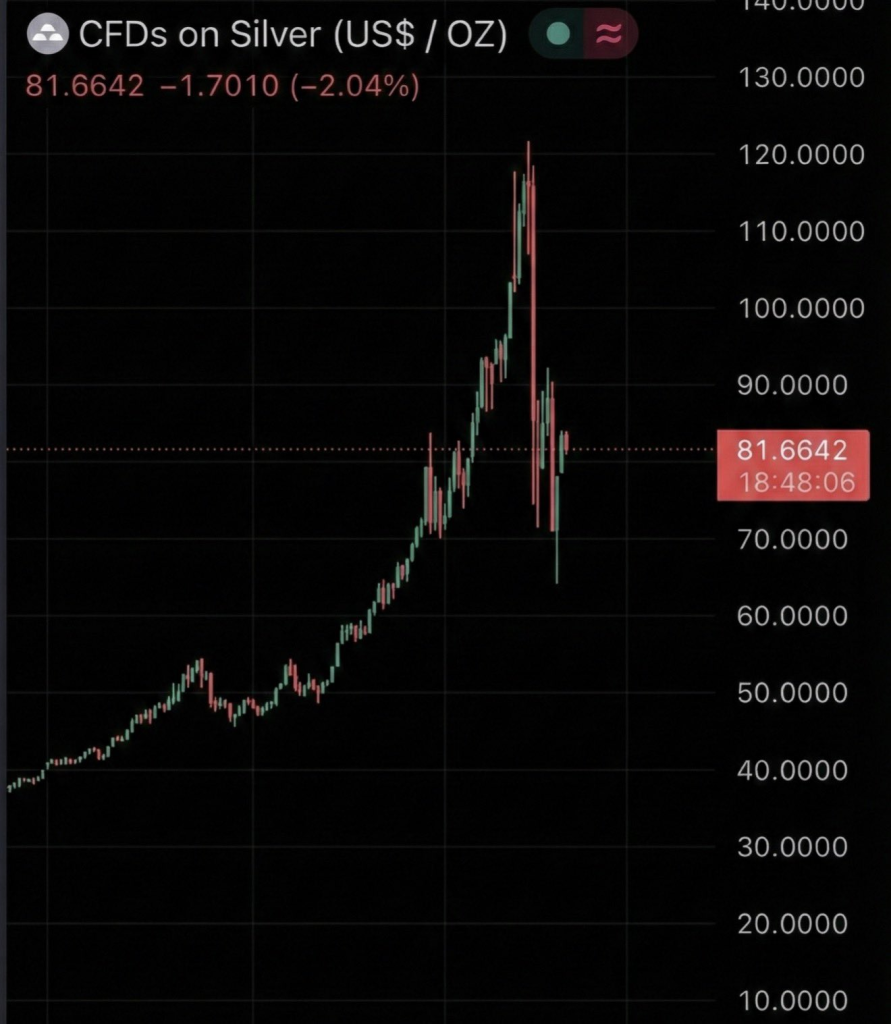
After pumping to around $120 earlier this year, the silver price crashed below $70 in a matter of weeks, then stabilized again near the $80 zone; a level that would normally signal calm consolidation.
Instead, it has sparked a fresh wave of debate about whether silver is being held down artificially, and whether the gap between “paper silver” and real-world physical demand is starting to break open.
A viral post circulating on X from ‘NoLimit’ has brought that discussion back into focus, as he argued that silver is no longer trading like a normal commodity, but like a pressure cooker building toward a violent repricing event.
And even though some claims go too far, the underlying question is real:
Why does silver keep behaving like a market under stress?
What you'll learn 👉
Silver Price Volatility Is Becoming Hard to Ignore
One of the most unusual features of the 2026 commodities landscape is how extreme the swings have become.
Silver moving 15–20% in short bursts is not typical for a metal that plays both an industrial and monetary role. This is centuries-old commodity that underpins solar panels, electronics, defense systems, and investment demand.
When the silver price can pump to $120, collapse under $70, and rebound again within the same macro cycle, it signals something deeper than ordinary speculation.
It indicates positioning stress, liquidity shocks, and structural imbalances between futures-driven trading and physical flows.
The Paper vs Physical Silver Disconnect
The viral thesis making rounds on social media focuses on one core idea:
Silver is being priced in two different markets.
- Paper silver – futures contracts, ETFs, derivatives
- Physical silver – bars, industrial demand, vault supply
This isn’t a conspiracy by itself. Most commodities trade this way.
But silver is unique because the paper market is enormous compared to the deliverable physical supply, which creates recurring tension when demand rises quickly.
If too many claims stack on top of too little real metal, the market becomes vulnerable to sudden squeezes.
That’s why silver has historically produced some of the most explosive moves in commodity history.
Why China’s Industrial Demand Actually Matters
One of the strongest points in the thread is about incentives.
China is the world’s manufacturing engine, and silver is a critical input for:
- solar photovoltaic cells
- EV components
- electronics and semiconductors
- industrial alloys
In that context, a rising silver price is not automatically bullish for Chinese industry. Higher raw material costs compress margins and increase production costs.
So the idea that China benefits from silver mooning is not as straightforward as retail narratives assume.
China benefits from stable access to physical supply, ideally at controlled prices.
That doesn’t prove suppression, but it explains why silver is geopolitically sensitive.
Read also: Robert Kiyosaki’s New Warning: Bitcoin Beats Gold – And Silver Is the Bonus Trade
Silver Has Now Been Classified as a Strategic Metal
Another real factor is that silver is increasingly being treated as more than a commodity.
Multiple governments have moved toward labeling silver as a strategic or critical mineral, largely because of its importance in:
- energy transition infrastructure
- military technology
- national supply chain security
Once a metal enters that category, the market changes.
It stops being only a trade and starts becoming part of national policy.
That’s a structural shift, not a tweet.
Read also: Why Silver Price Could Be Headed for a New All-Time High
Inventory Stress and the Supply Problem
Silver is also facing a supply issue that doesn’t get enough attention.
The market has now recorded multiple consecutive years of deficits, meaning demand has exceeded supply even before the next wave of solar expansion fully hits.
At the same time, above-ground inventories are not infinite.
If industrial demand continues rising while investment demand returns during inflation cycles, silver becomes one of the few markets where shortages can show up quickly.
That’s why physical tightness matters far more in silver than in something like oil or copper.
Silver is smaller, thinner, and easier to squeeze.
My Opinion About Silver Price Path
Here’s the honest take:
Silver does not need a grand manipulation conspiracy to explain what’s happening.
The silver market is naturally unstable because it sits at the intersection of three forces:
- industrial necessity
- monetary hedge demand
- paper leverage through futures
That combination creates a market that can look “rigged” simply because derivatives amplify every move.
The price is about whether enough metal exists at the right place, at the right time, under the right cost structure.
Silver’s path forward is likely to remain violent:
- sharp upside spikes
- brutal corrections
- sudden liquidity-driven reversals
The bigger trend, though, is hard to dismiss.
If solar demand keeps accelerating, deficits persist, and macro conditions push investors back into hard assets, silver becomes one of the most asymmetric commodities of this decade.
That does mean silver is no longer a sleepy metal.
It’s becoming a strategic battleground.
Read also: This Analyst Makes Urgent Silver Price Prediction
What Would Confirm a Real Silver Breakout?
If silver is truly entering a new cycle, the market will show it through:
- sustained physical premiums
- tightening exchange inventories
- industrial demand continuing despite higher prices
- gold/silver ratio compression
- price holding above key breakout zones instead of fading
The next major move will not come from Twitter hype.
It will come from physical stress.
Subscribe to our YouTube channel for daily crypto updates, market insights, and expert analysis.