Solana has never really been a quiet chain, and heading into 2026, it’s definitely not one that’s flying under the radar. After a strong move earlier in the cycle, the SOL price has cooled off a bit, but it doesn’t look like the kind of pullback that signals the end of the story.
What you'll learn 👉
What the Chart Is Telling Us About the SOL Price
If you zoom into the 4-hour chart, you can see that the SOL price recently ran into resistance around the $148 area, which is where sellers finally stepped in and pushed things lower. The drop that followed was fast and aggressive, taking price back toward the $133–$134 zone.
That area is important because it lines up with where SOL previously broke out, and now it’s being tested as support. The fact that buyers showed up there pretty quickly indicates there’s still real demand on dips. As long as the SOL price holds above $130, the structure doesn’t look broken, just reset.
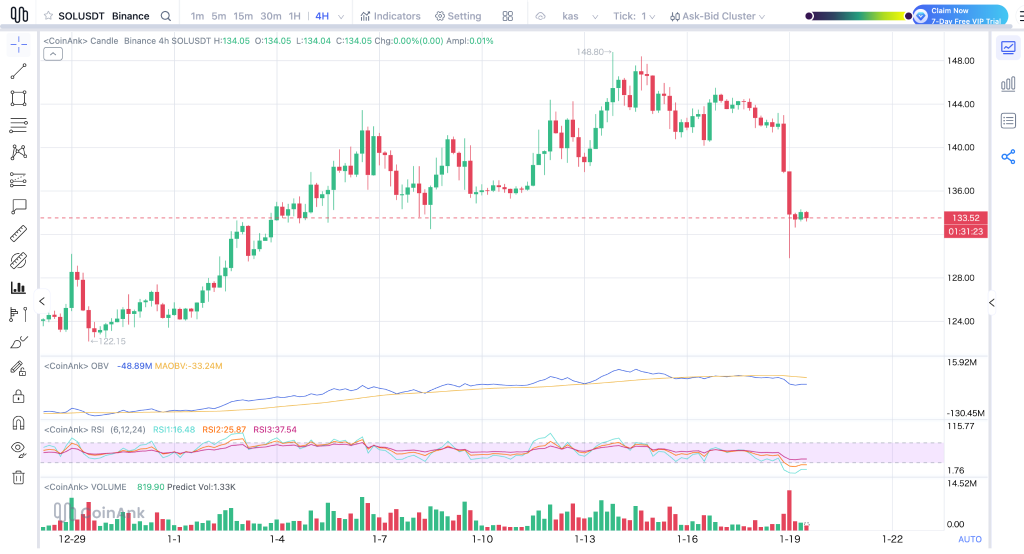
Instead of screaming “trend reversal,” the chart feels more like a pause after a big move. That’s usually where longer-term positions start building, especially when volume doesn’t confirm a full-blown distribution phase.
Why Alpenglow Could Matter More Than It Sounds
One of the biggest things on Solana’s radar for 2026 is the Alpenglow upgrade, and this isn’t just another routine update. Cutting transaction finality down to roughly 150 milliseconds changes what Solana can realistically be used for.
That kind of speed makes Solana a serious candidate for things like high-frequency trading, instant settlements, and payment flows that simply don’t work well on slower chains.
If Alpenglow rolls out smoothly and validators get on board without major issues, it could give the SOL price a much stronger foundation than hype alone ever could.
Of course, big upgrades always come with risk. If there are delays or technical hiccups, the market won’t ignore that. But if it works as planned, it pushes Solana into a category most chains can’t compete in.
Institutional Liquidity Is Starting to Feel Real
Another big shift is State Street choosing Solana for its SWEEP tokenized liquidity product. This isn’t just another partnership announcement for headlines. When a $5 trillion asset manager builds on your chain, it brings a different level of credibility.
If institutional capital starts flowing through Solana-based DeFi because of this, it could have a direct impact on activity, stablecoin usage, and ultimately long-term demand for SOL.
The pace of that adoption is still uncertain, especially with regulations and macro conditions in play, but directionally, it’s a meaningful signal.
Read Also: These Analysts Have Shocking Silver Price Predictions
So, What Does This Mean for the SOL Price in 2026?
Solana’s roadmap heading into 2026 is a rare mix of speed upgrades, institutional traction, and consumer-facing expansion.
From a chart perspective, the SOL price looks more like it’s consolidating than rolling over, which is usually a healthy sign after a strong rally.
If Solana executes on what it’s building and keeps pulling in both users and capital, the next phase for the SOL price could be shaped more by real utility than by speculation alone.
At this point, Solana doesn’t need bigger promises. It needs clean execution. And if it delivers on that, the upside narrative starts writing itself.
Subscribe to our YouTube channel for daily crypto updates, market insights, and expert analysis.