
Bitcoin and Ethereum moved higher late Tuesday night in the CET timezone. Bitcoin briefly touched $96,000 and is up about 3.5% over the past 24 hours. Ethereum climbed even faster, jumping more than 7% and trading above $3,300.
A few smaller coins are also seeing strong moves. Tokens like IP and DASH are up sharply. Still, this looks like a familiar setup. Bitcoin and Ethereum moved first, and the rest of the market followed.
What you'll learn 👉
Big Money Is Buying Bitcoin Again
One of the main reasons behind the move is fresh institutional demand. U.S. spot Bitcoin ETFs saw about $753 million in net inflows on January 13. Fidelity and BlackRock led those purchases.
This comes just days after MicroStrategy added another $1.25 billion worth of Bitcoin to its balance sheet. When ETFs and large companies buy at this scale, fewer coins remain available on exchanges. That tends to support prices, especially when retail trading is still relatively quiet.
As long as ETF inflows stay positive, Bitcoin has a solid bid underneath it.
Bitcoin Broke a Key Level
The technical picture also mattered. Bitcoin pushed above $95,000 and stayed there. That level had acted as resistance for days. Once it broke, short sellers were forced out of their positions.
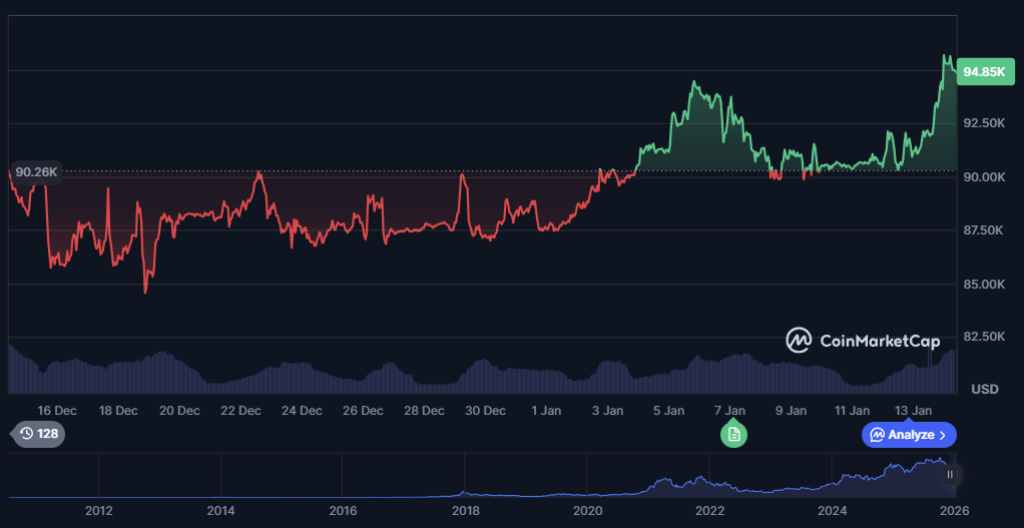
Roughly $222 million in Bitcoin shorts were liquidated in a single day. Futures trading activity jumped as well. Momentum indicators flipped positive, and that added fuel to the move.
If Bitcoin can hold above the $96,000 to $97,000 area, traders will keep talking about a possible push toward $100,000.
Inflation Data and Rate Cut Hopes Added Fuel
Macro conditions also played a role in the rally. The latest U.S. CPI report, released on January 13, came in mostly as expected on the surface, but the details mattered. Headline inflation printed at 2.7%, right in line with forecasts. Core inflation, however, came in softer at 2.6%, below expectations.
That was enough to revive expectations for interest rate cuts later this year. When traders start pricing in lower rates, risk assets usually benefit. Bond yields fall, the dollar eases, and capital looks for higher returns elsewhere. Crypto tends to react quickly to that shift.
Following the CPI release, Bitcoin pushed above $95,800, its highest level since November 2025, while Ethereum jumped nearly 7%. U.S. equities moved higher as well, with the Nasdaq 100 gaining about 1.2%. Crypto and tech stocks also showed renewed correlation, suggesting both markets were responding to the same macro signal.
Markets are now focused on what comes next from the Federal Reserve. Fed Chair Jerome Powell is scheduled to speak on January 15, and traders will be listening closely for any hints on the timing and pace of future rate cuts.
Ethereum Is Seeing Real Network Growth
Ethereum’s rally has its own reasons. On-chain data shows strong growth in new users. According to Santiment, Ethereum is now seeing more than 327,000 new wallets created per day on average. One day last week set an all-time high.
A big part of this is the Fusaka upgrade, which went live in December. It made Ethereum cheaper and easier to use, especially for Layer-2 activity. Fees dropped, and using apps on the network became smoother.
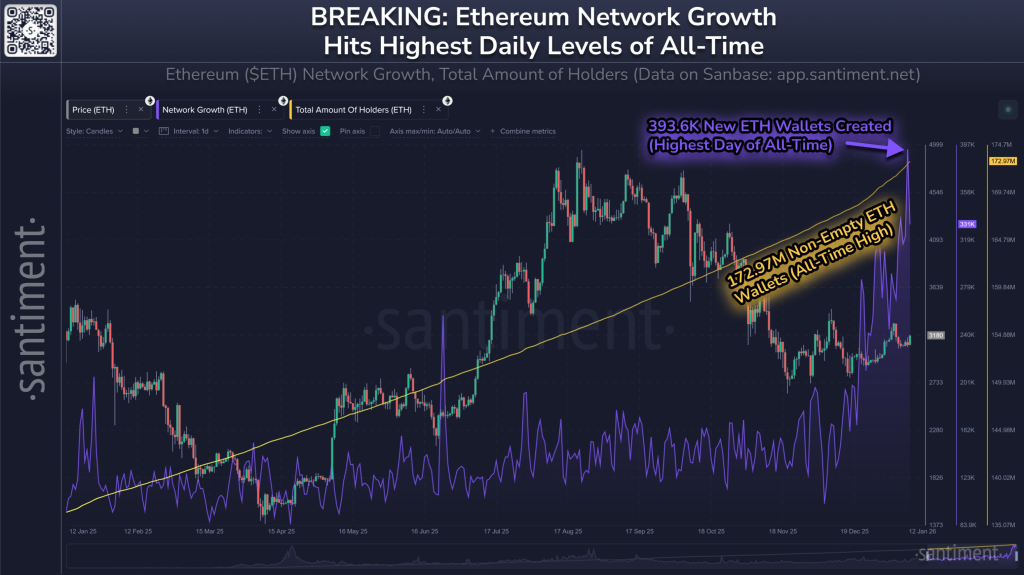
Stablecoin usage also picked up. Ethereum processed roughly $8 trillion in stablecoin transfers in the fourth quarter. That kind of activity usually brings in new users who need wallets to interact with the network.
Bitcoin and Ethereum Are Still in Control
Altcoins are moving, but this rally is still being driven by Bitcoin and Ethereum. Institutional buying, technical breakouts, and improving network data all lined up at the same time.
As long as Bitcoin stays above its recent breakout and Ethereum holds current levels, the broader market is likely to remain supported. For now, buyers are clearly in control.
Subscribe to our YouTube channel for daily crypto updates, market insights, and expert analysis.